
Book of Abstracts of the XXII Annual Meeting of the European Association of Vertebrate Palaeontologists, 30 June–5 July 2025, Kraków, Poland
Pterosaurs from Coahuila
Early Oligocene Fishes from Alabama, USA
Oldest evening bat from the Early Eocene of France
The digital endocast of Necrolemur antiquus
stapes trapped in artiodactyls bony labyrinth
Eocene (57) , Quercy Phosphorites (38) , Systematics (32) , Rodents (29) , Mammalia (27) , Rodentia (25) , Miocene (24)
Page 1 of 1, showing 1 record(s) out of 1 total
|
|
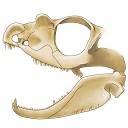
The skull of Tetraceratops insignis (Synapsida, Sphenacodontia)Frederik SpindlerPublished online: 1/9/20Keywords: cranium; pelycosaur; Permian; therapsid origins https://doi.org/10.18563/pv.43.1.e1 Abstract Tetraceratops insignis is known from a single, crushed skull from the Lower Permian of Texas. Its unique proportions and osteological details gained central meaning in the question of the origins of Therapsida since this early synapsid has been determined as the oldest and less derived therapsid. Apart from Tetraceratops, the ‘mammal-like’ Therapsida and their sister, the pelycosaur-grade Sphenacodontidae, are separated by one of the longest ghost lineages in tetrapod fossil record. However, the minor, though well justified critique faced insistent publication regarding the therapsid hypothesis. A carefull re-evaluation of the holotypic skull reveals that therapsid traits cannot be supported, including a rejection of the formerly supposed adductor shelf in the temporal fenestra. Increased understanding of ‘pelycosaur’ character variation underlines a haptodontine-grade or, less likely, sphenacodontid position for Tetraceratops. PV article infos Published in Vol 43-1 (2020) |
|
Page 1 of 1, showing 1 record(s) out of 1 total