|
Pterosaurs (Pterosauria) from the Cerro del Pueblo Formation (Late Campanian) of Coahuila, Mexico
Published online: 21/11/2025
Keywords:
Azhdarchoidea; Coahuila; Mexico; Pterodactyloidea; Pterosauria
https://doi.org/10.18563/pv.48.2.e1
Abstract
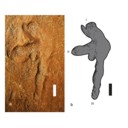
The Late Campanian Cerro del Pueblo Formation, located in southeastern Coahuila, Mexico, has produced a diverse array of vertebrate fossils. However, pterosaur remains from this unit are notably scarce. In this study, we describe new pterosaur material from the formation. The specimens include a fragmentary vertebra identified as belonging to an indeterminate, but derived pterodactyloid, along with the distal condyle of a left metacarpal, referable to an azhdarchoid pterosaur, and a left manus print. While these specimens provide additional evidence of pterosaur presence in the region during the Late Cretaceous, their fragmentary nature limits precise taxonomic and ichnotaxonomic identification. Nevertheless, they highlight the potential for future discoveries that could refine our understanding of the diversity and distribution of pterosaurs in Mexico.
PV article infos
Published in 48-2 (2025)
|
PDF
|
|
FIRST OCCURRENCE OF PAMPATHERIUM (XENARTHA: PAMPATHERIIDAE) FROM THE EL CEDAZO CREEK, AGUASCALIENTES, MEXICO
Published online: 01/01/1970
Keywords:
Aguascalientes; El Cedazo; Mexico; Pampatherium; Pleistocene
https://doi.org/10.18563/pv.49.2.e3
Abstract
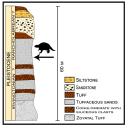
The glyptodontid Pampatherium is currently known from Pleistocene and Pliocene deposits in the State of Mexico, Puebla, Jalisco and Guanajuato. Recently, from the Late Pleistocene locality of El Cedazo creek (Aguascalientes), has revealed fragmentary remains assigned by its anatomical characteristics to the genus Pampatherium. The recovered specimen consists of an articulated anterior left fragment of the carapace comprising 78 osteoderms, which display the diagnostic ornamentation of the genus including a depressed central area, attenuated ornamentation, reduced or absent marginal band, as well as a general rectangular shape. These morphological characteristics clearly support assignment to the genus Pampatherium and distinguish the material from Holmesina, which has been previously reported from the El Cedazo Local Fauna. However, the absence of cranial or dental material and the potential influence of ontogenetic variation preclude a confident species-level identification. Accordingly, the specimen is referred to Pampatherium sp. This finding represents the first confirmed record of the genus in the state of Aguascalientes and provides new evidence of the presence of pampatheriids in the El Cedazo Local Fauna.
PV article infos
Article state: in_press
|
PDF
|