
Book of Abstracts of the XXII Annual Meeting of the European Association of Vertebrate Palaeontologists, 30 June–5 July 2025, Kraków, Poland
Pterosaurs from Coahuila
Early Oligocene Fishes from Alabama, USA
Oldest evening bat from the Early Eocene of France
The digital endocast of Necrolemur antiquus
stapes trapped in artiodactyls bony labyrinth
Eocene (57) , Quercy Phosphorites (38) , Systematics (32) , Rodents (29) , Mammalia (27) , Rodentia (25) , Miocene (24)
Page 1 of 1, showing 1 record(s) out of 1 total
|
|
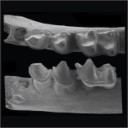
An evening bat (Chiroptera: Vespertilionidae) from the late Early Eocene of France, with comments on the antiquity of modern batsSuzanne J. Hand, Bernard Sigé, Michael Archer and Karen H. BlackPublished online: 8/1/16Keywords: evolution; palaeobiogeography; Prémontré; Western Europe; Ypresian https://doi.org/10.18563/pv.40.2.e2 Abstract Bats are among the most numerous and widespread mammals today, but their fossil record is comparatively meagre and their early evolution poorly understood. Here we describe a new fossil bat from dental remains recovered from late Early Eocene sediments at Prémontré, northern France. This 50 million-year-old bat exhibits a mosaic of plesiomorphic and apomorphic dental features, including the presence of three lower premolars, a single-rooted p3, short p4 with metaconid, myotodont lower molars and a tall coronoid process of the dentary. This combination of features suggests it is an early member of Vespertilionidae, today’s most speciose and geographically widespread bat family. The Prémontré bat has bearing on hypotheses about the origins of vesper or evening bats (Family Vespertilionidae), as well as crown-group chiropterans. PV article infos Published in Vol.40-2 (2016) |
|
Page 1 of 1, showing 1 record(s) out of 1 total