

Abstract book of the 18th Conference of the EAVP
Miocene Bovidae (Mammalia) of the Siwaliks: Hypsodontinae and Bovinae
Pterosaurs from Coahuila
Les sélaciens du Miocène de la région de Montpellier
Contribution à l'étude des genres Gliravus et Microparamys.
Muridae du Pliocène supérieur d'Espagne et du midi de la France.
Eocene (57) , Quercy Phosphorites (38) , Systematics (32) , Rodents (29) , Mammalia (27) , Rodentia (25) , Miocene (25)
Page 17 of 19, showing 20 record(s) out of 368 total

|
Rongeurs de l'Oligocène moyen provenant de nouvelles fouilles dans les phosphorites du QuercyMonique Vianey-Liaud
Published online: 15/09/1969 |
|
|
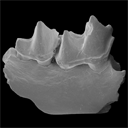
First Neogene Otonycteris (Chiroptera: Vespertilionidae) from Ukraine: its biostratigraphic and paleogeographic significance.Valentina V. RosinaPublished online: 19/03/2015Keywords: bats; East Europe; Gritsev; Late Miocene; Mammalia https://doi.org/10.18563/pv.39.1.e2 Abstract A new species, Otonycteris rummeli nov. sp., is described from the Late Miocene site Gritsev (MN 9) in the Ukraine. Otonycteris rummeli nov. sp. differs from those of most vespertilionids, except recent Otonycteris, Antrozous and Early Miocene Karstala silva, in having a well-developed entocingulid at the foot of the trigonid valley in the lower molars. The morphological resemblance of Otonycteris, Antrozous and Karstala is apparently a case of convergence in the evolution of the Old and New Worlds bat faunas. From at least the Middle Miocene the range of Otonycteris distribution spread to the whole of Central Europe and such a situation continued during the whole Late Miocene. This indicates a more arid climate in Europe during the Upper Miocene compared to the Quaternary. The reduction of the distribution range of Otonycteris and its extinction in most of the territory of Europe could have been caused by the global climatic cooling and increasing glacial cycle amplitude during the onset of the Quaternary. PV article infos Published in Vol.39-1 (2015) |
|

|
Contribution à la classification des Pistes de Vertébrés du Trias : les types du Stormberg d'Afrique du Sud (2 ème Partie: le Stormberg supérieur - 1. Le biome de la zone B/1 ou niveau de Moyeni: ses biocénoses).Paul EllenbergerPublished online: 01/12/1974Keywords: biocenosis; Footprints; South Africa; Stormberg; Trias https://doi.org/10.18563/pv.6.ext Abstract Les Pistes de Vertébrés du Stormberg Supérieur ("Trias terminal à Rhétien"), ou Quthingien PV article infos Published in Vol. 6, Ext (1974) |
|

|
Rongeurs muroidés du Néogène supérieur d'Afghanistan, évolution, biogéographie, corrélationsLouis D. BrandyPublished online: 30/09/1981Keywords: Afghanistan; Muroidea; Neogene https://doi.org/10.18563/pv.11.4.133-179 Abstract The rodent faunas of five afghan localities found in 1976 and 1977 (Sherullah, Ghazgay, Pul-e Charkhi, Dawrankhel 14 and 15) are studied. PV article infos Published in Vol. 11, Fasc. 4 (1981) |
|

|
An Australian Miocene Brachipposideros (Mammalia, Chiroptera) related to Miocene representatives from FranceBernard Sigé, Suzanne J. Hand
Published online: 15/12/1982 |
|

|
L'anatomie de Lyrocephaliscus euri (wiman), Trématosaure du Trias inférieur du Spitsberg : arrière-crâne, squelette axial et ceinture scapulaire.Jean-Michel Mazin
Published online: 30/06/1983 |
|

|
Agriotherium intermedium (Stach 1957) from a Pliocene fissure filling of Xiaoxian County (Anhuei Province, China) and the phylogenetic position of the genus.Zhanxiang Qiu and Norbert Schmidt-KittlerPublished online: 30/09/1983Keywords: Carnivora; China; PHYLOGENY; Pliocene; skull anatomy; Ursidae https://doi.org/10.18563/pv.13.3.65-81 Abstract A fragmentary mandible and maxilla of a small sized Agriotherium of a young individual discovered from a Pliocene fissure filling in Xiaoxian county (Anhuei Province, China) are described. Judging from the morphology of the dentition and its dimensions the new material can be identified as Agriotherium inlermedium (STACH l957). Hendey's proposition (1980) that the Agriotherium species are derived from Indarctos is reconsídered on the basis of the new documents. As a result of a more general phylogenetic discussion it can be stated, that: 1. the supposed size increase as well as other trends, leading from Indarctos to Agriotherium are untenable ; 2. there are no positive indications to assume a phylogenetic transition of these two genera. 3. there are no real arguments in favor of an adaptational reversal in the evolution of Agriotherium. Hence, many features of that genus supposed by Hendey to be derived are plesiomorphic ; 4. regardless of the previous points it is methodologícally impossible to establish direct ancestor - descendant relationships between Indarctos and Agriotherium species, as Hendey did. Based on the data available and especially on the characters of the new material from China it is more likely that Agriotherium and Indarctos are two genera which developed independently. While advanced Agriotherium species, e.g. A. africanum, resemble in some respects Indarctos by adaptational analogies, more primitive species, e.g. Agriotherium intermedium, are quite dissimilar to lndarctos. While Indarctos might be derived from an Ursavus like forerunner, Agriotherium has its roots more likely somewhere in between Ursavus and the Hemicyon-group. PV article infos Published in Vol. 13, Fasc. 3 (1983) |
|

|
Perutherium altiplanense, un Notongulé du Cretacé Supérieur du PérouLarry G. Marshall, Christian de Muizon
Published online: 30/11/1983 |
|

|
Les oiseaux aquatiques (Gaviiformes à Anseriformes) du gisement Aquitanien de Saint-Gerand-le-Puy (Allier, France): Révision systématique.Jacques ChenevalPublished online: 01/11/1984Keywords: Aves; Early Miocene; Osteology; Palaeoecology; Systematics https://doi.org/10.18563/pv.14.2.33-115 Abstract Six orders of birds adapted to aquatic life are represented among the numerous avifauna of "Saint-Gérand-le-Puy": Gaviiformes, Procellariiformes, Pelecaniformes, Ciconiiformes, Phoenicopteriformes, and Anseriformes. The present study of this avifauna proposes several changes in systematics:- Procellariiformes: Puffinus arvernensis does not belong in Procellariidae but in Diomodeidae, and it is transferred to the fossil genus Plotornis previously described in the Middle Miocene of France. - Pelecaniformes: Phalacrocorax littoralis remains in Phalacrocoracidae; P. míocaenus is different from the modern species, and is transferred to the new genus Nectornis. Empheresula arvernensis, described in the Oligocene deposits of Gannat, seems to be present in Saint-Gérand-le-Puy too. Pelecanus gracilis shows many differences from the modern species, and belongs to the new genus Miopelecanus, - Ciconiiformes: Ardea formosa nom. oblit. is a synonym of Proardeola walkeri. - Anseriformes: a new species closely related to swans is described, and belongs to the fossil genus Cygnopterus, of the Middle Oligocene of Europe; this species is called C. alphonsi. The ecology of each species is suggested by comparison with that of its nearest living relatives, and by study of osteological adaptations. PV article infos Published in Vol. 14, Fasc. 2 (1984) |
|

|
Le genre Mesembriacerus (Bovidae, Artiodactyla, Mammalia) : un Oviboviné primitif du Vallésien (Miocène supérieur) de Macédoine (Grèce)Geneviève Bouvrain and Louis de Bonis
Published online: 15/12/1984 |
|

|
Morphotypes dentaires actuels et fossiles des Chiroptères Vespertilioninés. 1e partie: Etude des morphologies dentairesHenri MenuPublished online: 30/09/1985Keywords: bats; Dental morphology; fossils; PHYLOGENY; recent; Systematics https://doi.org/10.18563/pv.15.2.71-128 Abstract The classifications of the recent vespertilionine bats were made wihtout taking in account the teeth morphology; this resulted in a reduction of the possibilities of comparison with the available fossils. The generalized use of dental formulae was abusive: this contributed to the admission of artificial genera. These conditions have long delayed the consideration of characters able to frame the phylogeny of the sub-family. In the first part of the study, the teeth morphologies are described and analysed. morphological reference types are established for each upper and lower tooth: they should make an easier elaboration of criteria for the differentiation at generic level. The position of the species in view of these criteria allows one to group them into homogeneous genera, and to appreciate the degree of relationship that the latter have between them. The second part of the study (next publicationà will develop inferences dealing with systematics and phylogeny PV article infos Published in Vol. 15, Fasc. 2 (1985) |
|

|
Repartition et dynamisme des faunes de Lacertilia et d'Amphisbaenia dans l'Eocène EuropeMarc AugéPublished online: 11/02/1993Keywords: Amphisbaenia; climate; Endemism; Eocene; Europe; Lacertilia; Metabolism https://doi.org/10.18563/pv.22.2-3.51-71 Abstract The composition of assemblages of lizards and Amphisbaenian from the European Eocene are described. At least ten lizard families are identified from the lower European Eocene levels. Eight are still recorded in the last level (Escamps) of the late Eocene. Agamid lizards (genus Tinosaurus) died out by the end of the lower Eocene and Varanid lizards (genus Saniwa) disappeared by the beginning of the late Eocene. Amphisbaenians are recorded throughout the Eocene in Europe. The lacertilian fossil record of Europe and North America show a high degree of faunal resemblance in the early Eocene, followed by a decrease during the later part of the epoch. The lacertilian and amphisbaenian faunas from the European Eocene are not subject to great variations during the period; this is in contrast with the mammal record at the same time. It is argued that the low metabolic rates and the ectothermy of lizards could explain those differences, along with the increasing insularity of the West European area during the late Eocene time. PV article infos Published in Vol. 22, Fasc. 2-3 (1993) |
|

|
Diversity of triconodont mammals from the early Cretaceous of North Africa-affinities of the AmphilestidsDenise Sigogneau-RussellPublished online: 15/10/2003Keywords: amphilestines; Early Cretaceous; gobiconodontines; North Africa; Teeth; triconodonts https://doi.org/10.18563/pv.32.1 Abstract The mammalian fauna (represented only by isolated teeth) from the early Cretaceous of Morocco includes a number of non-'therian' specimens, characterized by the antero-posterior alignement of the main molar cusps. This assemblage is very heterogenous, including forms (among them Gobiconodon palaios sp. nov.) that can be related to Laurasian triconodonts and several forms so far known only in this part of Gondwana (among them Kryptotherium polysphenos gen. et sp. nov.). The latter, in particular, exemplifies the diversity of the mammalian dental morphology in the Mesozoic, often largely underestimated. In the last part of this paper, the 'therian' affinity of the 'amphilestids' is discussed, on the basis of the arrangement of molar cusps, the interlocking mechanism and the occlusal pattem. PV article infos Published in Vol. 32, Fasc. 1 (2003) |
|

|
Sur le remplissage des "poches à phosphorite" d'Aubrelong (commune de Bach, Lot)Bernard GèzePublished online: 15/11/1974Keywords: Aubrelong; Quercy Phosphorites https://doi.org/10.18563/pv.6.1-2.21-25 Abstract L’article analyse les poches à phosphorite d’Aubrelong (Quercy), comparant les fouilles de 1937 (Éocène supérieur) et celles des années 1967-1970 (Oligocène inférieur), révélant une stratification contrastée : argiles brunes pauvres en fossiles en surface, et argiles rouges riches en phosphates et faune en profondeur. Les analyses géochimiques confirment une origine latéritique sous climat tropical humide, avec des remplissages tantôt stratifiés, tantôt chaotiques, remettant en cause l’hypothèse d’une progression chronologique uniforme des dépôts PV article infos Published in Vol. 06, Fasc. 1-2 (1974) |
|

|
Les serpents des phosphorites du QuercyJean-Claude Rage
Published online: 20/12/1974 |
|

|
Origins of avian reproduction: answers and questionsfrom dinosaurs.David J. Varricchio
Published online: 15/12/2003 |
|

|
Second international symposium on Dinosaur, Eggs and Babies (Montpellier-Aix-en-Provence, 25-29 Août 2003).Monique Vianey-Liaud
Published online: 15/12/2003 |
|

|
Evolution et extinction des reptiles marins au cours du Mésozoïque.Nathalie Bardet
Published online: 02/10/1995 |
|

|
Contributions à l'étude du gisement Miocène supérieur de Montredon (Hérault). Les grands mammifères. 8 - Analyse paléoécologique de la faune mammalienneSerge Legendre
Published online: 15/11/1988 |
|

|
Les Amphibiens et les reptiles du Pliocène supérieur de Balaruc II (Herault, France)Salvador Bailon
Published online: 15/09/1989 |
|
