|
Miocene Bovidae (Mammalia) of the Siwaliks, Part 1: Hypsodontinae and Bovinae.
Published online: 30/07/2026
Keywords:
Bovidae; horncores; Miocene; Siwaliks
https://doi.org/10.18563/pv.49.1.e1
Abstract
The fluvial sediments of the Siwaliks in northern Pakistan preserve an exceptional geologic and paleontological record encompassing parts of the Oligocene and all of the Miocene and Pliocene. The sediments, which can be thousands of meters thick, have abundant vertebrate and invertebrate fossils from hundreds of different levels. Fossils were first discovered in the Siwaliks in 1832 and there are important collections of them in the Museum of the Geological Survey of India as well as in various European, British, and American museums. Renewed collecting has now added over 10,000 bovid fossils to a new collection held by the Geological Survey of Pakistan. The fossils include rare skulls and many isolated horn cores, as well as teeth and postcranials. Here we discuss material belonging to the hypsodontinae, boselaphini, and bovini. We recognize four hypsodontine and twenty-two bovine species, plus one species of uncertain subfamilial placement. Nineteen of the twenty-seven have previously been named, while another five have cranial material suitable for defining a new species. Two species, referred to as ?Hypsodontinae sp. and Bovidae sp. 1, are distinctive but left unnamed. We are also uncertain about how distinctive what we refer to as Selenoportax aff. vexillarius is from Selenoportax vexillarius. Boselaphinines predominate in the fossil collections, both in terms of number of species and number of specimens. Most of the boselaphine genera are endemic to the Siwaliks, as are the hypsodontine Palaeohypsodontus and the possible bovini Pachyportax. The predominance of boselaphines together with the number of endemic taxa gives the Siwalik bovid fauna a distinctive aspect and collectively comprise the best-known Miocene record of the subfamily.
PV article infos
Article state: in_press
|
PDF
S.I. Data
|
|
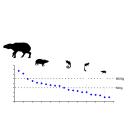
L’assemblage mammalien de l’Eocène continental du Complexe de Gour Lazib (Algérie) : structure écologique et implications paléoenvironnementales
Published online: 01/01/1970
Keywords:
Afrique du Nord; Cénogramme; Paléogène; Vertébrés
https://doi.org/10.18563/pv.49.2.e2
Abstract
Des prospections géologiques et paléontologiques sur les affleurements continentaux paléogènes du Complexe de Gour Lazib (Hammada du Dra, Algérie) nous ont permis de mettre en évidence plusieurs sites à vertébrés, sur une superficie de plus de cinq cents kilomètres carrés. La faune est constituée de nombreux vertébrés fossiles associant mammifères placentaires, poissons actinoptérygiens et protoptères, squamates, amphibiens, chéloniens, crocodiles et oiseaux. La flore de charophytes est également diversifiée. Les données bio-magnétostratigraphiques indiquent un âge compris entre l’Yprésien terminal et le Lutétien basal pour cet assemblage unique en Afrique. Les nombreux restes de mammifères récoltés ont une préservation exceptionnelle pour le Paléogène ancien arabo-africain et permettent une reconstitution paléoenvironnementale réalisée via une méthode couplant cénogramme et distribution pondérale des taxons arboricoles. Le profil du cénogramme, caractérisé par l’abondance des espèces de petite taille (insectivores, primates et rongeurs), la présence d’espèces de taille intermédiaire (hyracoïdes) et la rareté des grandes espèces (uniquement représentées par les hyracoïdes ; absence notable des proboscidiens et embrithopodes), met en évidence un milieu forestier assez fermé sous climat tropical. Par ailleurs, les données lithologiques et sédimentologiques indiquent un milieu fluviatile méandriforme où ont proliféré les charophytes. Plus hypothétique reste l’existence d’une saisonnalité dans les Gour Lazib, avec de possibles périodes temporaires modérément arides.
PV article infos
Article state: in_press
|
PDF
S.I. Data
|
|
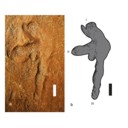
Pterosaurs (Pterosauria) from the Cerro del Pueblo Formation (Late Campanian) of Coahuila, Mexico
Published online: 21/11/2025
Keywords:
Azhdarchoidea; Coahuila; Mexico; Pterodactyloidea; Pterosauria
https://doi.org/10.18563/pv.48.2.e1
Abstract
The Late Campanian Cerro del Pueblo Formation, located in southeastern Coahuila, Mexico, has produced a diverse array of vertebrate fossils. However, pterosaur remains from this unit are notably scarce. In this study, we describe new pterosaur material from the formation. The specimens include a fragmentary vertebra identified as belonging to an indeterminate, but derived pterodactyloid, along with the distal condyle of a left metacarpal, referable to an azhdarchoid pterosaur, and a left manus print. While these specimens provide additional evidence of pterosaur presence in the region during the Late Cretaceous, their fragmentary nature limits precise taxonomic and ichnotaxonomic identification. Nevertheless, they highlight the potential for future discoveries that could refine our understanding of the diversity and distribution of pterosaurs in Mexico.
PV article infos
Published in 48-2 (2025)
|
PDF
|

|
La poche à Phosphate de Ste-Néboule (Lot) et sa faune de vertebres du Ludien supérieur. 6- Oiseaux
Published online: 25/09/1978
Keywords:
Eocene; Quercy Phosphorites
https://doi.org/10.18563/pv.8.2-4.217-229
Abstract
There are very few birds in the site of Sainte-Néboule. They belong to three species already known in the "Phosphorites" : Paraortyx brancoi, Aegialornis broweri, Cypselavus gallicus, and to one new species, Recurvirostra santaeneboulae. The comparison of some different bones of the genus Cypselavus with some Apodiformes and Caprimulgiformes shows that this genus must be classified in the order Apodiformes.
PV article infos
Published in Vol. 08, Fasc. 2-4 (1978)
|
PDF
|

|
The paramyid rodent Ailuravus from the middle and late Eocene of Europe, and its relationships
Published online: 15/05/1976
Keywords:
Ailuravinae; Rodentia
https://doi.org/10.18563/pv.7.1-2.117-149
Abstract
The complex taxonomic history of the paramyid rodent genus Ailuravus is reviewed. It has been described as Hyracotherium, as a creodont carnivore and as a lemuroid primate - errors at the ordínal level that are most unusual for a rodent. The genus is a member of the poorly known subfamily Ailuravinae, probably derived from some European Early Eocene species of Paramys. Aíluravus was a large arboreal paramyid with highly rugose cheek teeth, very well developed hypocone, and a remarkably weak lower incisor. It was tropical to subtropical. Three named species are recognized, A. macrurus from the Lutetian of Messel; the genotype, A. picteti, from Egerkingen, Buchsweiler and the Geiseltal, slightly later in the Lutetian; and A. stehlinschaubi, new name, from the Bartonian of Mormont-Eclépens and Robiac. One or more unnamed species are present in the Ypresian of Cuis. The species are close to a phyletic sequence. No later representatives of the genus are known. The late Eocene to earliest Oligocene North American paramyid Mytonomys, whose relationships have been obscure, is tentatively referred to the Ailuravinae.
PV article infos
Published in Vol. 07, Fasc. 1-2 (1976)
|
PDF
|
|
Abstract book of the 18th Conference of the European Association of Vertebrate Palaeontologists (EAVP), 5-9 July 2021, Benevento, Italy
Published online: 12/07/2021
Keywords:
2021; Abstracts; Benevento; EAVP
https://doi.org/10.18563/pv.eavp2021
Abstract
Welcome to the 18th conference of the EAVP, the first online meeting of our association. The pandemic emergency made it impossible to organize the in-person meeting in Benevento as we all had hoped. However, we couldn’t miss another EAVP meeting. Therefore, this year we are meeting online, trying to make the experience the closest to the in-person meeting possible, in order to offer the delegates the opportunity to share knowledge, build new networks and reinforce the old ones. We have received 137 communications, with more than 150 delegates from 24 countries. All the abstracts have passed a peer review process and are part of this special volume of Palaeovertebrata, the official journal of the EAVP. This year we are also offering a variety of workshops, roundtables and symposia on different topics. These include the annual “Pride EAVP: An LGBTQ+ Roundtable” and “Women in Palaeontology Roundtable Discussion”, together with the workshops on “Gendered Perspective in Palaeontological Research: from Definition to Action”, “International Palaeontology Education: Virtual Teaching and Real-World Learning”, “Stepping out of Academia: Why, When and How?”, “Introduction to Hypothesis Testing in Statistics”, “The Early-Middle Pleistocene Transition: Marked Mammal Turnover and Ecosystem Dynamic” (included in the early event for the XXI INQUA Congress in Rome 2023, “A Mediterranean Perspective on Quaternary Sciences”). To conclude, we are hosting two symposia on “Palaeoart: Diversity on and behind the Canvas” and “3D fossils, Robotic and Experimental Palaeontology”. We wish you all a happy and productive meeting. And see you in Benevento next year!
PV article infos
Published in Special Volume 1-2021 (2021)
|
PDF
|

|
Avant propos au "Premier catalogue des specimens-types Paléontologiques déposés dans les collections de l'Université de Montpellier II"
Published online: 20/12/1994
Keywords:
Editorial; Type specimens
https://doi.org/10.18563/pv.23.ext.1-2
Abstract
Avant propos au "Premier catalogue des specimens-types Paléontologiques déposés dans les collections de l'Université de Montpellier II".
View editorial
Published in Vol. 23, Ext (1994)
|
PDF
|

|
A new species of chimaeroid fish from the upper Paleocene (Thanetian) of Maryland, USA
Published online: 29/10/1991
Keywords:
Chimaeroid nov. sp.; Maryland; U.S.A.; Upper Paleocene
https://doi.org/10.18563/pv.21.1-2.85-94
Abstract
The recent discovery of several mandibular toothplates of a chimaeroid fish at a dig in the area of the Landover Mall, near Landover, Prince Georges County, Maryland, brings to our attention a new species of the chimaeroid, Ischyodus.
Although superficially reminiscent of the European chimaeroid toothplates of Ischyodus thurmanni (cf. text-fig. 2), I. williamsae nov. sp. probably has a more closer relationship to I. bifurcatus CASE, 1978, of the Upper Cretaceous of New Jersey and Delaware.
PV article infos
Published in Vol. 21, Fasc. 1-2 (1991)
|
PDF
|

|
La poche à phosphate de Ste-Néboule (Lot) et sa faune de vertebres du Ludien supérieur. 7- Didelphides (Marsupiaux)
Published online: 25/09/1978
Keywords:
Eocene; Quercy Phosphorites
https://doi.org/10.18563/pv.8.2-4.231-242
Abstract
The family Didelphidae is represented by three species in the Sainte-Néboule site, phosphorites of Quercy (lower Oligocene, San Cugat's nivel): Amphiperatherium minutum (Aymard), Amphiperatherium sp. and Peratherium cuvieri (Fischer). Only the first and third species are abundant (88 and 97 pieces). This two populations are described. The marsupial fauna of the european lower Oligocene is not recognized in its entirety in this site.
PV article infos
Published in Vol. 08, Fasc. 2-4 (1978)
|
PDF
|

|
Les sélaciens du Miocène de la région de Montpellier
Published online: 15/12/1970
Keywords:
Ichtyofauna; Miocene; Montpellier
https://doi.org/10.18563/pv.3.ext.1-139
Abstract
The utilization of screen-washing and attack by dilute acetic acid has permitted the collecting, in the Miocene of the department of Hérault (France), of a very rich ichthyofauna. This fauna is presently comprised of about 60 studied species, of which 11 are new, and represents, in the present state of knowledge, the most varied Miocene selachian fauna described in the world.
The abondance of material has allowed an overall revision to be made; it has thus been possible to complete the description and the figuration of species that were poorly known until now, and to synonymize species that were established on simple morphotypes. Paleo-ecologic study of the ichthyofauna has permitted conclusions to be drawn relative to climate and bathymetry; it was thus possible to show that the Miocene fauna of Hérault was a fauna of a subtropical sea, essentially neritic with rare pelagic contributions.
Knowing the stratigraphic position of the localities, it has been possible to distinguish three faunal assemblages based on associations of species. Some hypotheses on the evolution of certain lineages have been expressed.
The comparison of this fauna with that of other regions permitted the relationships of two diflerent faunal provinces to be specified: the first belongs to the northern domain, characterized by a fauna still subtropical but with numerous temperate water elements; the leoond belongs to the Mesogean domain characterized by warm water forms. It has also lhovm that contemporary faunas could be very different according to the bathymetric zone in which they lived, which furnishes valuable information for the paleogeographic reconstruction of sedimentary basins.
PV article infos
Published in Vol. 3, Ext (1970)
|
PDF
|

|
Les traces de pas d'amphibiens, de dinosaures et autres reptiles du Mesozoïque Français : inventaire et interprétations.
Published online: 15/12/2007
Keywords:
Footprints; France; Inventory; Mesozoic; palaeontology; palaeovenvironments; Stratigraphy
https://doi.org/10.18563/pv.35.1-4.1-149
Abstract
Since the 19th century, thousands of footprints were observed in the geological series of the French Mesozoic. All are located in the Triassic and Jurassic. After a promising beginning, in France, it is only a few papers which will be published in the first half 20th century, unlike the USA and of others countries of Western Europe. One ought to wait about 1950 for a revival and now they are nearly 200 papers which were devoted to the ichnofossils. The literature abundance and the renewed interest of the naturalists for the palichnologic studies decided to us to write a synthesis work. This one begins with a stratigraphic inventory in which, localisation, age and paleontological contents of about 180 fossiliferous sites are specified. After having pointed out the followed methods, the footprints paleontological interpretation is then approached in detail and the results obtained are replaced in stratigraphy to deduce the fauna evolution during the Mesozoic. So, it appears that Ichnologic data, more varied and rich in the Triassic and Liassic than those relating to the bones, very rare for the considered periods, are very informative. The middle Triassic (Anisian-Ladinian), thus reveals Cotylosauria, Lepidosauria, Crurotarsi with Rauisuchia, Ornithosuchidae, Crocodylia and Dinosauromorpha more the "Prodinosauria": Dinosamiforme whose skeletons are known in Argentina but only in Ladinian. The rather fast domination of Dinosaurs during Norian is also as well shown. The almost exclusive presence of their footprints, up to fifty cm long, in the Lower Hettangian indicates their supremacy in the environments. Footprints characterise not very deep life places located between inter-supratidal limits and often out of water. Sedimentologic and Palaeontologic studies showed that they were great coastal spaces during Middle Triassic, flood-plain with sebkhas while Upper Triassic, and a large !!coastal marsh!! in Grands-Causses during Liassic in which, mainly, fine stromatolithic layers were deposited. During the same periad, bay beaches spread in Vendée. During the Middle Jurassic, they are also brackish to lacustrine environments and recifallagoons in- the Upper Jurassic. Numerous measurements of the footprints and trackways directions showed that the animaIs moved there in weil defined directions, for long periods. They seem due to the palaeotopography of the life environments relatively stable. Also, the discovery of vegetal radicular networks and small footprints far away from the continental borderlands has suggested that the animals continuously lived in these palaeoenvironnements, belonging to large ecosystems, where the sedimentation rate was weak. This explains that thebadies could not fossilize there but only their footprints through the cyanobacterian action in main cases. From the vertical distribution of different ichnospecies, defined with adapted statistical methods, explained in this work, a palichnostratigraphy was established for the Middle Triassic. Although the footprints are also abundant in Hettango-Sinemurian of "Grands-Causses" and the Vendée, it was not possible, up to now, to establish any zonation in this series; Probably because the palichnofauna is too little diversified there, currently reduced to a majority of Theropods II-IV tridactyl traces.
PV article infos
Published in Vol. 35, Fasc. 1-4 (2007)
|
PDF
|
|
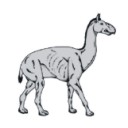
Reconstruction of the cervical skeleton posture of the recently-extinct litoptern mammal Macrauchenia patachonica Owen, 1838
Published online: 02/05/2023
Keywords:
biomechanics; cervical posture; functional anatomy; Litopterna; Macrauchenia
https://doi.org/10.18563/pv.46.1.e1
Abstract
Macrauchenia patachonica was among the largest litopterns. It had a long neck with elongated cervical vertebrae, unique among endemic South American ungulates. We calculated the pattern of stress in the joints between the vertebral centra along the neck of the recently-extinct litoptern mammal M. patachonica for various hypothetical neck postures to determine which one is optimal. We also determined the zygapophyseal alignment positions for the neck, assuming a wide range of values for the thickness of the intervertebral discs. We concluded that a vertical posture is the one that best meets the requirements of nearly constant stress. This upright posture was probably a frequently adopted posture by M. patachonica while feeding or standing. It is also possible that occasionally it could adopt a gerenuk-like posture. In almost any other position, the standard deviations of stress values (SD) divided by mean stress (MS) have values between 0.4 and 0.5. Since it was a mixed feeder, M. patachonica probably used different postures to reach resources at different heights. However, an almost horizontal posture was required for the optimal articulation of the neck vertebrae. It probably represents the posture during fast locomotion, as suggested in a previous biomechanical study of locomotion.
PV article infos
Published in 46-1 (2023)
|
PDF
|
|
Book of Abstracts of the XXII Annual Meeting of the European Association of Vertebrate Palaeontologists, 30 June–5 July 2025, Kraków, Poland
Published online: 20/06/2025
Keywords:
Abstracts; EAVP
https://doi.org/10.18563/pv.eavp2025
Abstract
Book of Abstracts of the XXII Annual Meeting of the European Association of Vertebrate Palaeontologists, 30 June–5 July 2025, Kraków, Poland.
PV article infos
Published in 48-1 (2025)
|
PDF
|

|
Field trip guides of the 20th Annual Conference of the European Association of Vertebrate Palaeontologists, 26th June – 1st July 2023, Sabadell (Barcelona), Spain
Published online: 16/06/2023
Keywords:
https://doi.org/10.18563/pv.eavp2023fieldtrip
Abstract
PV article infos
Published in special issue 1-2023 (2023)
|
PDF
|
|
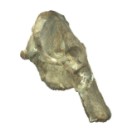
Morphological description and identification of an extraordinary new elephant cranium from the early Pliocene of Ileret, Kenya
Published online: 21/10/2021
Keywords:
Elephantidae; Loxodonta adaurora; cranium; early Pliocene; Ileret; Kenya
https://doi.org/10.18563/pv.44.2.e3
Abstract
Abstract: Paleontological exploration in the Turkana Basin near Ileret, Kenya yielded the most complete adult elephant cranium (KNM-ER 63642) known from the late Miocene to mid-Pliocene. KNM-ER 63642 derives from the lower Lonyumun Mb. of the Koobi Fora Fm. and dates to the early Pliocene, >4.3 Ma. The cranium is immense in size and preserves most of its structures including left and right M2-3, permitting its comprehensive comparative study and secure taxonomic assignment to Loxodonta adaurora. Features distinctive of the species and exhibited by KNM-ER 63642 include very elongate, divergent tusk alveoli, a short, biconvex cranial roof, anterosuperior angulation of the occipital planum, non-inflated occipital planum and absence of supralateral parietal "bossing," broad, flat premaxillary nasal processes, broad, laterally downturned nasal aperture superior to the level of the orbits, and M3s with wide, subhypsodont plates that are parallel-faced and separated by U-shaped transverse valleys. The M3s also exhibit characteristic L. adaurora traits of greatest width at their bases, rounded cross-sectional shape, thick enamel, abundant cementum, and strong anterior and posterior accessory conules. Of extant taxa, KNM-ER 63642 most closely resembles crania of African elephants. Its inclusion in the Loxodonta clade is tenuous, however, because shared features are either symplesiomorphic or are difficult to test for synapomorphy due to the poor fossil record of crania of late Miocene-early Pliocene elephants. Overall, the cranial morphology of KNM-ER 63642 is unexpectedly advanced for an elephant of its antiquity. Its anteroposterior compression and height are concordant with efficient proal masticatory action, indicating that by the early Pliocene L. adaurora evolved craniodental adaptations in phase with feeding preference for C4 grasses. The advantage of synchrony of morphology and behavior is reflected by the dominance of the species in the greater Turkana Basin during that interval.
PV article infos
Published in 44-2 (2021)
|
PDF
|
|
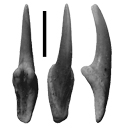
Additions to the elasmobranch assemblage from the Bandah Formation (middle Eocene, Bartonian), Jaisalmer District, Rajasthan, India, and the palaeobiogeographic implications of the fauna
Published online: 23/06/2021
Keywords:
Chondrichthyes; Elasmobranchii; Indian Ocean; Palaeogene; South Asia
https://doi.org/10.18563/pv.44.2.e1
Abstract
Isolated elasmobranch teeth (sharks and rays) from the middle Eocene (Bartonian) Bandah Formation in the Jaisalmer District of Rajasthan, India are described. The remains improve our knowledge of the environment represented by this lithostratigraphic unit and the ecology preserved therein. Seventeen unequivocal taxa were identified, including Nebrius sp., Striatolamia aff. S. macrota, Brachycarcharias atlasi, B. lerichei, cf. Jaekelotodus sp., Carcharhinus mancinae, Rhizoprionodon sp., Physogaleus sp., Galeocerdo clarkensis, G. eaglesomei, Odontorhytis aff. O. pappenheimi, “Rhinobatos” sp., “Dasyatis” sp., Coupatezia sp., “Aetomylaeus” sp., “Rhinoptera” sp., and Ouledia aff. O. lacuna. Of these, “Aetomylaeus” sp., B. atlasi, C. mancinae, G. clarkensis, G. eaglesomei, cf. Jaekelotodus sp., Nebrius sp., Odontorhytis aff. O. pappenheimi, Ouledia aff. O. lacuna, and “Rhinoptera” sp. are reported from the middle Eocene of India for the first time. The Bandah Formation elasmobranch palaeofauna has close affinities to the Palaeocene-Eocene Tethyan/Paratethyan faunas of Africa, Madagascar, Asia, and Europe, and some taxa indicate a western hemisphere influence from North America. The Bandah Formation palaeofauna indicates that deposition occurred in a moderately shallow marine environment. The Bartonian age is primarily based on foraminifera but is corroborated by the presence of elasmobranch taxa that also occur in contemporaneous deposits elsewhere. The marine regression started during the early Palaeogene, and our study indicates that the sea completely withdrew from the Jaisalmer Basin after the deposition of the Bandah Formation. This event may have been synchronous with the middle Eocene uplift of the Himalayan-Tibetan Plateau.
PV article infos
Published in 44-2 (2021)
|
PDF
|
|
Late Campanian theropod trackways from Porvenir de Jalpa, Coahuila, Mexico
Published online: 29/11/2017
Keywords:
Dinosaur tracks; Late Cretaceous; Mexico.; Tetanura; Theropod
https://doi.org/10.18563/pv.41.2.e1
Abstract
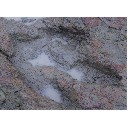
Confident attribution of bipedal tridactyl dinosaur tracks to theropods or ornithopods can be challenging. Here we describe trackways produced by tetanuran dinosaurs, previously attributed to hadrosaurs, from Coahuila State, northeastern Mexico. Multiple trackways headed in the same direction suggest gregarious behaviour in these late Campanian theropods.
PV article infos
Published in Vol 41-2 (2018)
|
PDF
|

|
Mammals of the Eocene locality Toru Ajgyr (Kyrgyzstan)
Published online: 15/12/2006
Keywords:
Eocene; Kyrgyzstan; Mammalia; Olsenia; Palaeoecology; Stratigraphy; taxonomy
https://doi.org/10.18563/pv.34.e12
Abstract
Morphological descriptions are given of Eocene mammals from the locality Toru Ajgyr (NEKyrgyzstan) that were excavated in 1997 and 1998 in a cooperation between the Martin-Luther-University Halle (Germany), the Zoological Institute in St. Petersburg (Russia) and the Seismological Institute in Bishkek (Kyrgyzstan). The species found belong mostly to perissodactyls, as Lophialetes sp., Teleolophus sp. and brontotheres. The primitive ungulate family Olseniidae is represented by a complete foot skeleton of cf. Olsenia sp. In addition, postcranial materials of Gobiatherium mirificum (Dinocerata) and of artiodactyls have been collected and are described herein. Based on mammals, the locality is part of the Asian Land Mammal Age Arshantan and is stratigraphically equivalent with the Bridgerian Land Mammal Age in North America and with the lower and middle Geiseltalian of the European Middle Eocene.
PV article infos
Published in Vol. 34, Fasc. 3-4 (2006)
|
PDF
|
|
Autopsie d’une radiation adaptative : Phylogénie des Theridomorpha, rongeurs endémiques du Paléogène d’Europe - histoire, dynamique évolutive et intérêt biochronologique
Published online: 15/12/2016
Keywords:
Diversification; Extinction; Paléoenvironnements; Rodentia; Theridomyoidea
https://doi.org/10.18563/pv.40.3.e1
Abstract
Résumé :
L’étude des rongeurs Theridomorpha permet de suivre le déroulement d’une radiation adaptative pendant toute sa durée (Eocène moyen-Oligocène terminal), sur un territoire restreint à l’extrémité ouest de l’Europe Occidentale. Dans ce papier, la phylogénie de ce groupe est établie à partir d’une analyse cladistique reposant sur l’examen de 315 caractères (310 dentaires). Le groupe d’intérêt comprend 110 des 132 espèces (24 genres) de Theridomyoidea et deux genres encore inclus jusqu’ici dans les Reithroparamyinae qui rejoignent les Theridomorpha. Les groupes externes comprennent des Glires basaux, Cocomys, Tanquammys et 16 Ischyromyiformes. Un cadre phylogénétique robuste est produit, qui permet de clarifier la systématique des Theridomorpha. La position des Remyoidea (nov. sup.fam.) au sein des Ischyromyiformes, extérieure aux Theridomorpha, est confortée. Les Protadelomys et Tardenomys sont à la base des Theridomyoidea, avant la séparation en deux clades correspondant aux familles Pseudosciuridae et Theridomyidae. Les sous-familles sont consolidées : Pseudosciurinae et Sciuroidinae pour les Pseudosciuridae ; Issiodoromyinae, Oltinomyinae, Columbomyinae, Theridomyinae, auxquelles s’ajoute au moins une nouvelle sous-famille (Patriotheridomyinae), pour les Theridomyidae. La topologie des chrono-espèces (sensu Simpson), traitées antérieurement comme lignées évolutives, apparaît dans la plupart des cas sous forme de clades successifs dans lesquels les espèces sont le plus souvent arrangées de manière pectinée, émergeant dans l’ordre stratigraphique. L’analyse des caractères aux principaux nœuds permet de consolider les caractères diagnostiques des taxons et les tendances évolutives, ainsi que de discuter des divers parallélismes et convergences dans l’évolution des structures et patrons dentaires (e.g., émail des incisives unisérié chez les Issiodoromyinae et les Patriotheridomyinae, ou pseudo-multisérié chez les Blainvillimys les plus hypsodontes, les Protechimys et Archaeomys ; patrons dentaires téniodontes ; allongement des dents déciduales chez les Patriotheridomyinae, Issiodoromyinae et Theridomyidae ; sélénodontie ou lophodontie). Les dynamiques évolutives traduites par les changements morphologiques sont mises en relation avec les variations environnementales. Enfin, les implications biochronologiques de l’évolution des Theridomyoidea sont discutées.
Abstract:
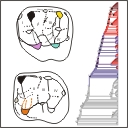
The adaptive radiation of the rodents Theridomorpha occurred during a limited time window (middle Eocene to late Oligocene), on an area restricted to Western Europe. In this paper, the phylogeny of this group is established via a cladistic assessment of 315 morphological characters (310 dental). The group of interest encompasses 110 upon 132 species (24 genera) of Theridomyoidea, and two genera formerly included within the Reithroparamyinae, and which are included here within the Theridomorpha. The outgroups include basal Glires, Cocomys, Tanquammys and 16 Ischyromyiformes. A robust phylogenetic frame is produced, which allows clarifying the systematics of the Theridomorpha. Within the Ischyromyiformes, the Remyoidea (nov. supfam.) are set apart from the Theridomorpha. Protadelomys and Tardenomys represent the earliest offshoots of the Theridomyoidea, before the dichotomy between Pseudosciuridae and Theridomyidae. It supports the former subfamilies Pseudosciurinae and Sciuroidinae within the Pseudosciuridae; and for the Theridomyidae: the Issiodoromyinae, Oltinomyinae, Columbomyinae, Theridomyinae, with at least one new subfamily (Patriotheridomyinae). The topologies of the chronospecies (sensu Simpson), formerly considered as evolutionary lineages, appear in most cases as successive clades, in which the species are generally pectinately arranged and emerging in the stratigraphic order. The analysis of characters supporting the main nodes allow consolidating the diagnosic characters of the taxa and their evolutionary trends, as well as discussing the various cases of parallelism and convergence in the evolution of structures and dental patterns (e.g., uniserial incisor enamel for Issiodoromyinae and Patriotheridomyinae, or pseudo-multiserial for the most hypsodont Blainvillimys, Protechimys and Archaeomys; taeniodont dental patterns; lengthening of deciduous premolars for Patriotheridomyinae, Issiodoromyinae and Theridomyidae; selenodonty or lophodonty).
Evolutionary dynamics are analysed with respect to environmental changes. Finally, biochronological implications of the evolution of Theridomyoidea are discussed.
PV article infos
Published in Vol 40-3 (2016)
|
PDF
S.I. Data
|

|
The Late Cretaceous nesting site of Auca Mahuevo (Patagonia, Argentina): eggs, nests, and embryos of titanosaurian sauropods.
Published online: 15/12/2003
Keywords:
Argentina; Eggs; embryos; Late Cretaceous; nests; Patagonia; titanosaurian sauropods
https://doi.org/10.18563/pv.32.2-4.97-108
Abstract
The late Cretaceous Auca Mahuevo nesting site (Neuquén Province, Argentina) has produced a large number of sauropod eggs, many of them containing the remains of embryos. Research at this site has generated important information about the development of the embryos, the morphology and eggshell microstructure of the eggs, and the reproductive behavior of sauropod dinosaurs. Cranial features present in the embryos have allowed their identification as those of titanosaurian sauropods. Differences in the texture of the sediments that contain some of the egg-clutches have illuminated their nest architecture. Microstructural studies of eggshells have expanded our knowledge of their variability and the incidence of pathologies within a reproductive titanosaurian population. Maps showing the spatial distribution of eggs and clutches. the stratigraphic distribution of the egg-beds, and the sedimentological context in which they are contained, have provided the basis for several inferences about the nesting behavior of these dinosaurs.
PV article infos
Published in Vol. 32, Fasc. 2-4 (2003)
|
PDF
|