|
Physogaleus hemmooriensis (Carcharhinidae, Elasmobranchii), a new shark species from the early to middle Miocene of the north sea basin.
Published online: 15/10/2006
Keywords:
Carcharhinidae; Early Miocene; Elasmobranchii; Hemmoorian; new species; North Sea Basin; Physogaleus
https://doi.org/10.18563/pv.34.e14
Abstract
A new carcharhinid shark species, Physogaleus hemmooriensis sp. nov., is described from the Lower Hemmoorian (Behrendorfian, late Burdigalian, early Miocene) of Werder, Lower Saxony, Germany. P. hemmooriensis also occurs in the Edegem and Antwerpen Sands Members of the Berchem Formation, Belgium, and in the Miste Bed, Aalten Member of the Breda Formation, The Netherlands, which have an early to middle Miocene age. In the Western Atlantic region, the taxon is present in the early Miocene Calvert Formation of Delaware, U.S.A, which is largely contemporaneous with the Hemmoorian.
PV article infos
Published in Vol. 34, Fasc. 1-2 (2006)
|
PDF
|
|
Fossil snakes from the Palaeocene of São José de Itaboraí, Brazil Part III. Ungaliophiinae, Booids incertae sedis, and Caenophidia. Summary, update and discussion of the snake fauna from the locality
Published online: 16/12/2008
Keywords:
booid-grade incertae sedis; Brazil; Caenophidia; New taxa; Palaeocene; Russellophiidae; Snakes; tropidophiids; Ungaliophiinae
https://doi.org/10.18563/pv.36.1-4.37-73
Abstract
Aside from Madtsoiidae, anilioids, and Boidae that were studied previously, the middle Palaeocene of ltaborai (BraziI) has produced Ungaliophiinae ("tropidophiids"), booid-grade snakes incertae sedis, and a possible Russellophiidae (Caenophidia) that are described in the present article. This article is the third and final report on the snakes from the locality. The Ungaliophiinae (Paraungaliophis pricei gen. et sp. nov.) are rare whereas the booid-grade snakes incertae sedis (ltaboraiophis depressus gen. et sp. nov., Paulacoutophis perplexus gen. et sp. nov.) are more frequent. A single vertebra is referred to the Russellophiidae (Caenophidia) with reservation. An update of the whole fauna of snakes from ltaborai is provided. Hechtophis austrinus that was tentatively referred to the erycine Boidae is now regarded as a Boidae incertae sedis. Most snakes from Itaborai are known only from the locality. Astonishingly, only the ailioids Coniophis cf. C. precedens gives possible evidence of interchanges between South and North America. The fauna of snakes from Itaborai, as well as the other Palaeocene faunas of snakes from South America are distinct from those of the Cretaceous and the Eocene of South America; they appear to be more different from the Cretaceous faunas than from those of the Eocene. The fauna from Itaborai is the richest and most diverse assemblage of snakes from the Palaeocene worldwide; it shares only a few taxa with other Palaeocene localities.
PV article infos
Published in Vol. 36, Fasc. 1-4 (2008)
|
PDF
|
|
Designating a lectotype for Mesacanthus pusillus (Gnathostomata: Acanthodii)
Published online: 03/03/2021
Keywords:
acanthodians; Chordata; Devonian; Midland Valley; Orcadian Basin
https://doi.org/10.18563/pv.44.1.e2
Abstract
The early gnathostome genus Mesacanthus is well represented in both Lower Old Red Sandstone and Middle Old Red Sandstone assemblages of northern and central Scotland. This ‘acanthodian’ taxon is currently thought to comprise two valid species: M. mitchelli and M. pusillus. Although the whereabouts of the holotype of M. mitchelli (NHMUK PV P560) is known, the syntype material for M. pusillus has long been thought lost. Here we identify at least one specimen that formed part of the original syntype material for M. pusillus, albeit in a slightly different condition than when it was originally figured. This specimen is ROM 25872, which is here designated as the lectotype. A second specimen – ELGNM 1978.191.1 – could represent another of the syntype specimens, but poor preservation quality makes it impossible to be certain.
PV article infos
Published in 44-1 (2021)
|
PDF
S.I. Data
|
|
First early Eocene tapiroid from India and its implication for the paleobiogeographic origin of perissodactyls
Published online: 08/09/2015
Keywords:
Ceratomorpha; Helaletidae; Paléogène; Tapiromorpha; Vastan
https://doi.org/10.18563/pv.39.2.e5
Abstract
The presence of cambaytheres, the sister group of perissodactyls, in western India near or before the time of collision with Asia suggests that Perissodactyla may have originated on the Indian Plate during its final drift towards Asia. Herein we reinforce this hypothesis by reporting two teeth of the first early Eocene tapiromorph Perissodactyla from the Cambay Shale Formation of Vastan Lignite Mine (c. 54.5 Ma), Gujarat, western India, which we allocate to a new genus and species, Vastanolophus holbrooki. It presents plesiomorphic characters typical of the paraphyletic “Isectolophidae,” such as small size and weak lophodonty. However, the weaker hypoconulid and low paralophid, higher cusps, lower cristid obliqua, and the lingual opening of the talonid are found in Helaletidae, the most primitive tapiroid family. V. holbrooki, gen. et sp. nov., may be the oldest and the most primitive tapiroid, suggesting that at least tapiroid perissodactyls originated on India.
PV article infos
Published in Vol.39-2 (2015)
|
PDF
|
|
A pangolin (Manidae, Pholidota, Mammalia) from the French Quercy phosphorites (Pech du Fraysse, Saint-Projet, Tarn-et-Garonne, late Oligocene, MP 28)
Published online: 14/09/2015
Keywords:
Oligocene; Pangolin; Pech du Fraysse; Quercy Phosphorites
https://doi.org/10.18563/pv.39.2.e4
Abstract
Pangolins have never shown a high taxic diversity and their fossil record is scarce. We report here the first discovery of a partial humerus from late Oligocene deposits in Pech du Fraysse (MP28, France). The new specimen from Pech du Fraysse is described and compared to various extant and extinct species of pangolins. It shows a suite of morphological features very similar to the humeri discovered in Saint-André (MP 26), Solnhofen (Burdigalien), and Saulcet (Aquitanian), attributed here to Necromanis franconica. The description of the specimen from Pech du Fraysse allowed us to discuss the systematics of Paleogene and Neogene pholidotans. The differences between PFY 4051 and N. franconica on the one side, and N. quercyi on the other side, might be sufficiently important to justify a generic distinction. A comparison with extant species showed that N. franconica was likely terrestrial and fossorial based on its humeral morphology.
PV article infos
Published in Vol.39-2 (2015)
|
PDF
|

|
Artiodactyla from the early Eocene of Kyrgyzstan
Published online: 16/12/1996
Keywords:
Artiodactyla; Asia; Diacodexeidae; Eocene; Kyrgyzstan
https://doi.org/10.18563/pv.25.2-4.359-369
Abstract
Isolated upper cheek teeth of the primitive artiodactyl Diacodexis sp., upper molars of Eolantianius russelli gen. et sp. nov. (Diacodexeidae), two lower molars tentatively referred to Eolantianius russelli gen. et sp. nov., and astragali of Diacodexeidae indet. are described from the early Eocene (late Ypresian) of locality Andarak 2 in Kyrgyzstan.
PV article infos
Published in Vol. 25, Fasc. 2-4 (1996)
|
PDF
|

|
Mode de vie et affinités de Paschatherium (Condylarthra, Hyopsopontidae) d'après ses os du tarse
Published online: 16/12/1996
Keywords:
Astragalus; Calcaneum; Condylarthra; Eocene; Functional morphology; Paschatherium; PHYLOGENY
https://doi.org/10.18563/pv.25.2-4.225-242
Abstract
Tarsals that can be confidently attributed to Paschatheríum dolloi from Dormaal (Belgium) are described. The astragalus is short; its broad neck is set at an angle of 30 degrees to the trochlea. The trochlea is pulley-shaped and proximally extended. There is no astragalar foramen. The medial tibial facet extends distally in a cup deeply excavated in the neck and buttressed. The sustentacular facet extends toward the navicular facet but is not fully confluent with it. The calcaneum bears a proximo-distally extended proximal facet for the astragalus. A relatively large peroneal tubercle projects from the body, and is situated distally. Functionally, the trochlea indicates extensive flexion-extension movements of the foot. Calcaneo-astragalar facets indicate sliding and rotation between the two tarsals. The inclination of the navicular facet suggests frequent foot inversion. The peroneal tubercle reflects good muscular capacities for foot rotation. Overall morphology is interpreted as a scansorial adaptation similar to that of sciurids.Comparisons are made with the tarsals of Macrocranion vandebroeki from Dormaal and Hyopsodus paulus from the Bridgerian of Wyoming. Some similarities between the astragali of Paschatherium and Macrocraníon (trochlea) are interpreted as convergences for rapid locomotion. However absence of mobility at the lower ankle and midtarsal joints in M. vandebroekzi suggests that this species was cursorial, as is known for M. tenerum from Messel. Similarities in the calcanea of Paschatherium and Hyopsodus are probably the result of close phylogenetic relations, and confirm the placement of Paschatherium in the hyopsodontids. The differences in the calcanea of Paschatherium and Macrocranion underline that Paschatherium is distinct from erinaceomorph insectivores. The differences in astragalar morphology between Paschatherium and Hyopsodus show that a marked adaptive divergence separates the two genera. We speculate about the common occurrence of a deep tibial cup (“cotylar fossa”) and a pulley-shaped trochlea in Paschatherium and hyracoids, suggesting that an adaptive scenario similar to that having led to Paschatherium (scansoriality) might explain the acquisition of the peculiar hyracoid tarsal characters; such a scenario contradicts the concept of Pantomesaxonia. Other peculiar characters of Hyopsodus suggest that hyopsodontids might be given more consideration in the search for hyracoid (and tethythere) origins.
PV article infos
Published in Vol. 25, Fasc. 2-4 (1996)
|
PDF
|

|
Rates of evolution in divergent species lineages as a test of character displacement in the fossil record : tooth size in Paleocene Plesiadapis (Mammalia, Proprimates)
Published online: 16/12/1996
Keywords:
character displacement; character divergence; fractal time series; Plesiadapis; Rates of evolution
https://doi.org/10.18563/pv.25.2-4.193-204
Abstract
Two species lineages of North American late Paleocene Plesiadapis exhibit a pattern of size divergence from a common ancestral lineage. Time series of fossils in each of these lineages are analyzed to test the idea that size divergence represents competitive character displacement. The critical factor in a test of character divergence is showing that divergent lineages evolved directionally rather than randomly (multifactorially). Analysis of evolutionary rates and their temporal scaling in Plesiadapis shows that both divergent species lineages have the scaling slope expected for lineages evolving randomly rather than directionally, and size divergence in Plesíadapis does not represent character displacement. Rates of evolution commonly observed on a per-generation time scale are high enough to produce character displacement within a few generations. Thus character displacement is not likely to be visible on scales of time that can be studied in the fossil record.
PV article infos
Published in Vol. 25, Fasc. 2-4 (1996)
|
PDF
|

|
Dating dinosaur oodiversity: chronostratigraphic control of LateCretaceous oospecies succession.
Published online: 15/12/2003
Keywords:
Biostratigraphy; Chronology; dinosaur eggshells; Late Cretaceous
https://doi.org/10.18563/pv.32.2-4.121-148
Abstract
An increasing fossil record of dinosaur eggs and eggshells allows putting ootaxa within a chronostratigraphic framework, in order to study their distribution pattern leading eventually to their use as biochronological markers. For these purposes, high-quality data exists in four major regions; North America, South America, Europe and Asia (Central Asia and India). Most of the highly diverse dinosaur egg record has been dated as Latest Cretaceous in age (Campanian-Maastrichtian), reaching the Cretaceous-Tertiary boundary closer than the dinosaur bone record. However, dating continental sections is problematic and need to be carefully verified, as it appears when comparing the European dinosaur eggshell record from two well-studied areas. Ootaxa distribution in both sides of the Pyrenees (Tremp and Aix basins) shows comparable oospecies successions, but different chronology. This disagreement probably indicates that one or both successions have a wrong chronostratigraphic calibration.
PV article infos
Published in Vol. 32, Fasc. 2-4 (2003)
|
PDF
|

|
Rongeurs du Miocène supérieur de Chorora, Ethiopie: Murinae, Dendromurinae et conclusions.
Published online: 30/07/2001
Keywords:
Ethiopia; Late Miocene; Muridae; Rodentia
https://doi.org/10.18563/pv.30.1-2.89-109
Abstract
The subfamilies Murinae and "Dendromurinae" both include 4 species at Chorora. Among the former, while Preacomys nov. gen. seems to be a forerunner of Acomys, the affinities of the remaining, poorly known taxa, are more difficult to evaluate. The bulk of the fauna, remarkably, consists of Dendromurines. Their similarities with those of Ngorora tends to pull the site back in time, but the large size and diversity of Murines fit better an age more recent than the very beginning of the Late Miocene.
PV article infos
Published in Vol. 30, Fasc. 1-2 (2001)
|
PDF
|
|
Les Chiroptères du Miocène inférieur de Bouzigues. 1- Etude systématique.
Published online: 17/04/1968
Keywords:
bats
https://doi.org/10.18563/pv.1.3.65-133
Abstract
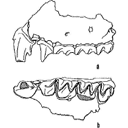
In recent years, the techniques of chemical preparing have permitted a rich paleontologic material to be obtained from the phosporitic sediment of Bouzigues (Hérault, France). The fauna of this locality is comprised of quite varied microvertebrates, amphibians, reptiles, birds, mammals. Twenty five species of the latter, belonging to seven orders, are today known from the site. Among them, the numerous rodents have allowed L. Thaler to chronologically situate this fauna in the Zone of Laugnac (<< late Aquitanian ›> of some authors).
The chiropterans are, with the rodents, the best represented of the locality's mammals. Three families comprise the bat fauna, with nearly complete dominance by one of them (Hippoxideridae) over the two others (Megadermatidae and Vespertílionidae)
Six forms are described, of which three are new species and one a new sub-genus.
Megaderma braillomi n. sp., an animal of rather large size, shows like the Miocene megaderms several evolved dental characters, translating the adaptation of these animals to a partially carnivorous regime. The Bouzigues species seems, however, to represent a particular lineage.
Hipposideros (Brachipposideros n. subgen.) dechaseauxi n. sp. and Hípposideros (Brachipposideros) cf. collongenris Depéret, small sized forms, belong to a group rather well represented in the late Oligocene and early Miocene of Europe, and not distinguished until now within the genus Hipposideros.
Hipposideros (Pseudorhinolophus) bouziguensis n. sp., is the most abundant mammal in the locality and, occuring at the Oligocene-Miocene limit, the last representative known of the subgenus Pseudorhínolophus, common in Europe from the middle Eocene.
However, beyond Neogene and Quaternary times, certain among the numerous living species of Hipposideros are close to Pseudorhinolophus and others to Brachipposíderos. 'This fact would in the future justify a global revision of the genus, on the basis of comparative anatomy of the squeleton and of the teeth.
The bat fauna of Bouzigues is completed by two small Vespertilionidae, rare forms, Myoris sp. I and sp. II.
PV article infos
Published in Vol. 01, Fasc. 3 (1968)
|
PDF
|
|
Enamel hypoplasia on rhinocerotoid teeth: Does CT-scan imaging detect the defects better than the naked eye?
Published online: 03/01/2022
Keywords:
fossil teeth; method; micro-CT imaging; Rhinocerotoidea
https://doi.org/10.18563/pv.45.1.e2
Abstract
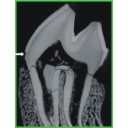
Micro-CT imaging is an increasingly popular method in paleontology giving access to internal structures with a high resolution and without destroying precious specimens. However, its potential for the study of hypoplasia defects has only recently been investigated. Here, we propose a preliminary study to test whether hypoplastic defects can be detected with micro-CT (μCT) scan and we assess the costs and benefits of using this method instead of naked eye. To do so, we studied 13 fossil rhinocerotid teeth bearing hypoplasia from Béon 1 (late early Miocene, Southwestern France) as positive control and 11 teeth of the amynodontid Cadurcotherium (Oligocene, Phosphorites du Quercy, Southwestern France), for which enamel was partly or totally obscured by cement. We showed that all macroscopically-spotted defects were retrieved on 3D reconstructions and selected virtual slices. We also detected additional defects using μCT scan compared to naked eye identification. The number of defects detected using μCT was greater in the Cadurcotherium dataset (paired-sample Wilcoxon test, p-value = 0.02724) but not for our control sample (paired-sample Wilcoxon test, p-value = 0.1171). Moreover, it allowed for measuring width and depth of the defects on virtual slices (sometimes linked to stress duration and severity, respectively), which we could not do macroscopically. As μCT imaging is both expensive and time consuming while not drastically improving the results, we recommend a moderate and thoughtful use of this method for hypoplasia investigations, restricted for instance to teeth for which enamel surface is obscured (presence of cement, uncomplete preparation, or unerupted germs).
PV article infos
Published in 45-1 (2022)
|
PDF
S.I. Data
|
|
Difficulties with the origin of dinosaurs: a comment on the current debate
Published online: 01/07/2020
Keywords:
dinosaur anatomy; dinosaur evolution; Ornithoscelida; palaeobiogeography; Triassic Period
https://doi.org/10.18563/pv.43.1.e3
Abstract
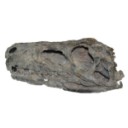
The origin and early evolutionary history of the dinosaurs is a topic that has recently gone through a period of renewed interest and academic debate. For 130 years, one way of classifying the various dinosaur subgroups persisted as the accepted model, with increasing levels of research in the past quarter-century also providing evidence for the hypothesis that dinosaur origination occurred in the Southern Hemisphere, particularly in South America. It is, after all, from within the Late Triassic strata of countries like Argentina and Brazil that we get some of the very best early dinosaur specimens; many of these specimens are the earliest known representatives of some of the major dinosaur subgroups, such as the theropods and sauropodomorphs. However, some recent analyses have brought about a shift in terms of what is currently accepted and what is now disputed regarding the origin of dinosaurs – the Southern Hemisphere origination hypothesis was questioned (although this was based upon observations and not with quantitative analysis techniques), as has the shape of the dinosaur tree. Responses to the new hypothesis were numerous; many further supported a Southern Hemisphere point of origin. Whilst the interrelationships between the major dinosaur clades remains to be resolved, the current data does seem to comprehensively answer the question of where the dinosaurs first originated. However, it is arguable whether the current data that is being used in such palaeobiogeographical analyses is sufficient to provide an answer to the question of where specifically the dinosaur clade first appeared. This short communication urges a degree of caution about the current consensus and what steps may need to be taken to ensure that more meaningful results are produced in the future.
PV article infos
Published in Vol 43-1 (2020)
|
PDF
|

|
Compléments sur les Chiroptères de l'Eocène moyen d'Europe. Les genres Palaeochiropteryx et Cecilionycteris.
Published online: 01/10/1980
Keywords:
Chiroptera; Geiseltal; Messel; Middle Eocene
https://doi.org/10.18563/pv.9.ext.91-126
Abstract
New dental and skeletal material referable to Palaeochiropteryx tupaiodon from the Middle Eocene locality of
Messel (G.F.R.) is studied, which provides additions to the previously gained knowledge of this european genus. Dental specimens from Geiseltal (G.D.R.), also of Middle Eocene age, allow us to analyze Cecilionycteria prisca. Some of these are separated to establish a new genus, Matthesia, and two new species, M. germanica and M. ? insolita.
PV article infos
Published in Vol. 9, Ext (1980)
|
PDF
|

|
Types dentaires adaptatifs chez les sélaciens actuels et post-paléozoïques.
Published online: 01/09/1986
Keywords:
Dental types; evolution; Fossil selachians; Recent selachians; Trophic adaptations
https://doi.org/10.18563/pv.16.2.57-76
Abstract
The dentition of selachians is characterized by an often very pronounced heterodonty involving a great morphological diversity. Despite this fact, the dentitions of selachians can be grouped in a rather reduced number of dental types corresponding to trophic adaptations: grasping, tearing, cutting, crushing, grinding and grasping-grinding type. The numerous exemples of convergence and parallelism that can be observed in fossil selachians and between Recent and fossil ones is the result of this reduced number of dental types. These dental specialisations allow to try a reconstruction of the way of life of fossil forms.
PV article infos
Published in Vol. 16, Fasc. 2 (1986)
|
PDF
|

|
Les Entélodontes des phosphorites du quercy
Published online: 15/11/1974
Keywords:
Entelodontes; Quercy Phosphorites
https://doi.org/10.18563/pv.6.1-2.87-108
Abstract
The entelodonts of the Quercy phosphorites are essentially known from isolated teeth. The skull remains attributed to Entelodon magnum by Kowalewsky in 1876 and the type left mandible of Enteladon depereti RÉPELIN, 1918 do not belong to this family. From a morphologic point of view, the teeth from Quercy are quite comparable to those from the type localities of E. magnum and E. deguilhemi. In the absence of distinctive anatomical criteria between E. magnum (small species from the level of Ronzon) and E. deguilhemi (large species from the level of Villebramar) they are referred, according to their size, to one or the other of these two species. However, some of them are intermediate in size. Their existence speaks in favor of a close relationship between E. magnum and E. deguilhemi and confers a real stratigraphic interest to these entelodonts of Western Europe. Finally, some anatomical characters (notch on the mesial border of P4, presence of a paraconid joined to the metaconid, trigonid higher than talonid) considered until now as peculiar to the North American Archaeotherium and not yet cited in its European contemporary Entelodon have been brought to light on the teeth from Quercy.
PV article infos
Published in Vol. 06, Fasc. 1-2 (1974)
|
PDF
|

|
Table ronde sur les phosphorites du Quercy Montauban 15-16 Décembre 1972
Published online: 15/11/1974
Keywords:
Quercy Phosphorites
https://doi.org/10.18563/pv.6.1-2.1-3
Abstract
Voici une centaine d'années débutait sur les Causses du Quercy l'exploitation des phosphorites qui devait permettre d'amasser des collections de Vertébrés fossiles uniques au monde. Ces fossiles firent l'objet de nombreuses publications et les noms de Filhol, Gaudry, Schlosser, Stehlin, Teilhard de Chardin sont attachés à ces premières études.
Après quelques années de prospection, les fouilles dans le Quercy ont repris en 1965, organisées par les laboratoires montpelliérains et parisiens. Ces premières recherches ont été aidées par le Centre National de la Recherche Scientifique qui a organisé une « table ronde» pour faire le point des premiers résultats obtenus. Ceux-ci ont été jugés suffisamment prometteurs pour que le C.N.R.S, ait décidé de poursuivre son effort par l'intermédiaire d'une Recherche Coopérative sur Programme.
PV article infos
Published in Vol. 06, Fasc. 1-2 (1974)
|
PDF
|

|
Mammals and stratigraphy : Geochronology of the continental mammal-bearing Tertiary of south America.
Published online: 15/12/1983
Keywords:
Cenozoic; Geochronology; Mammalia; South America; Stratigraphy; Tertiary
https://doi.org/10.18563/pv.13.ext
Abstract
The principles and practices employed in establishment and recognition of South American land mammal ages are reviewed along with previous and present concepts of distinguishing time, rock, and faunal units. Previous chronological arrangements of South American Tertiary land mammal faunas are appraised on the basis of recent geological and paleontological data. Twelve South American Tertiary land mammal ages are here recognized [from oldest to youngest, Riochican (middle to late Paleocene); Casamayoran (early Eocene); Mustersan (middle Eocene); Divisaderan (late Eocene); Deseadan (early [to middle?] Oligocene); Colhuehuapian (late Oligocene); Santacrucian (early Miocene); Friasan (middle Miocene); Chasicoan (late Miocene); Huayquerian (latest Miocene); Montehermosan (early to middle Pliocene); and Chapadmalalan (late Pliocene)]. As all except the Friasian were originally defined on the basis of Argentine faunas, these are discussed first and at length, and each is reviewed with discussion of type locality, stratigraphy, type fauna, and faunal correlations. Non-Argentine faunas are then discussed country by country in alphabetical order.
A review is given of radioisotope dates obtained on volcanic rocks (i.e., basalts, tuffs) associated with mammalbearing beds in Argentina. Based on these age determinations and on correlation of the late Tertiary land mammals involved in the interchange between North and South America, a chronology of South American land mammal ages correlated with North American land mammal ages and European marine stages is proposed.
It is concluded that South America was an island continent through most of the Tertiary Period (ca 65 to about 3 Ma). As a result, the land mammal fauna of South America developed in isolation and was dominated by autochthonous endemic groups. Toward the end of the Tertiary (i.e., middle Miocene) a unique faunal balance had been achieved by the descendants of the ancient inhabitants (notoungulates, litopterns, condylarths, astrapotheres, edentates, marsupials) and of later (late Eocene) waif immigrants (caviomorph rodents, platyrrhine primates). A prominent feature of this mammal fauna was the combination of carnivorous and omnivorous marsupials with native placental herbivorous ungulates, subungulates, and edentates.
Sometime during the late Miocene, a limited but important interchange of mammalian taxa between North and South America took place. Procyonids (raccoons and their allies), a group of North American origin, first appear in South America in strata of Huayquerian Age, while members of the extinct South American ground sloth families Megalonychidae and Mylodontidae first appear in North America in early Hemphillian time. These groups dispersed along island arcs before the appearance of the Panamanian land bridge in the Pliocene (ca 3.0 Ma). Cricetine rodents, a group of North American origin, are first known in South America in strata of Montehermosan Age. The known taxa are too advanced and diversified to be considered the first of this group to invade South America. lt is believed by some workers that these rodents arrived before the Montehermosan, possibly in the late Miocene or earlier, by waif dispersal from North America.
The isolation of South America ended with the appearance of the Panamanian land bridge, which provided a direct, dry land connection between the two Americas. Across this portal an extensive interchange of terrestrial faunas occurred, and the fossil record documents an intermingling of these long-separated land mammals faunas.
The beginning of this interchange by land route in South America is marked by the appearance of mammals which evolved from North American emigrants in the Chapadmalal Formation of Argentina. These include a mustelid (Conepatus), a tayassuid (Argyrohyus), and four genera (Akodon, Dankomys, Graomys, Reithrodon) of cricetine rodents. The appearance of this contingent of northern animals favors the existence of the Panamanian land bridge by this time. Likewise, a large number of terrestrial vertebrates of South American origin appear in North America in beds of late Blancan Age date around 2.7 Ma. Among the mammals are Neochoerus, Erethizon, Glyptotherium, Glossotherium, Kraglievichia, and Dasypus.
PV article infos
Published in Vol. 13, Ext (1983)
|
PDF
|
|
Dortokid turtle remains from the Upper Cretaceous of Cruzy (Hérault, southern France) and phylogenetic implications
Published online: 14/11/2022
Keywords:
Cruzy; Dortoka vasconica; France; Late Cretaceous; Turtle
https://doi.org/10.18563/pv.45.2.e3
Abstract
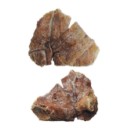
An isolated right costal 1 from the Late Cretaceous Massecaps locality (Cruzy, Hérault, southern France) is assigned to Dortoka vasconica (Dortokidae). This find adds a new element to the Late Cretaceous turtle fauna of Cruzy and further supports the hypothesis that two distinct lineages of Dortokidae were present in Europe during the Late Cretaceous-Paleogene due to geographical isolation.
PV article infos
Published in 45-2 (2022)
|
PDF
|

|
La poche à phosphate de Sainte-Néboule (Lot) et sa faune de vertébrés du Ludien supérieur. 13-Rongeurs
Published online: 25/09/1978
Keywords:
Eocene; Quercy Phosphorites
https://doi.org/10.18563/pv.8.2-4.313-318
Abstract
Sainte-Néboule has yielded only 4 species of Rodents. But the Theridomyids (Blainvillimys rotundidens and Patriotheridomys altus) are very significative of the age of the locality: Ste-Néboule is lower than the marker level of Escamps
PV article infos
Published in Vol. 08, Fasc. 2-4 (1978)
|
PDF
|