

Abstract book of the 18th Conference of the EAVP
Miocene Bovidae (Mammalia) of the Siwaliks: Hypsodontinae and Bovinae
Pterosaurs from Coahuila
Les sélaciens du Miocène de la région de Montpellier
Contribution à l'étude des genres Gliravus et Microparamys.
Muridae du Pliocène supérieur d'Espagne et du midi de la France.
Eocene (57) , Quercy Phosphorites (38) , Systematics (32) , Rodents (29) , Mammalia (27) , Rodentia (25) , Miocene (25)
Page 15 of 19, showing 20 record(s) out of 368 total

|
Eléments nouveaux sur l'évolution des genres Eucricetodon et Pseudocricetodon (Eucricetodontinae, Rodentia,Mammalia, de l'Oligocène d'Europe Occidentale.Bernard ComtePublished online: 01/07/1985Keywords: evolution; Occidental Europe; Oligocene; Rodentia; Systematics https://doi.org/10.18563/pv.15.1.1-68 Abstract The review of material recently collected in the new localities from the “Phosphorites du Quercy", and different localities from the South of France, bring new informations on the genus Eucricetodon THALER. 1966, and Pseudocricetodon THALER, I969 (Middle and Upper Oligocene. Western Europe). Thanks to Eucricetodon huerzeleri VIANEY-LIAUD, 1972, which were unsufficiently known until now, is proposed. During the middle Oligocene Eucricetodon atavus MISONNE, 1957 seems to give rise to two lineages. One of them led to Eucricetodon huberi,which however exhibits a larger size and a development of progressive characters on the teeth. The other would be Eucricetodon huerzeleri well differentiated at the “Mas de Pauffié" standard level (beginning of the upper Oligocene). The ornementation of lower incisors is described, when possible. Though the fossils are not abundant, it seems that the ancestral lineage, Eucriretodon atavus, remains in the upper Oligocene (Boningen standard level). evolving into Eucricetodon praecursor SCHAUB, 1925 (Rickenbach standard level). The characters of Eucricetodon dubius (SCHAUB. 1925), represented by a numerous population in Pech Desse and Pech du Fraysse (Quercy). confirm that this species and Eucricetodon praecursor belong to two different lineages. As Eucricetodon dubius shows more primitive features, this species could not originale from Eucricetodon atavus -Eucricetodon huberi. The appearance of this species at the level of Mas de Pauffié could be the result of an immigration. A new definition of Pseudocricetodon incertus (SCHLOSSER. 1884) is given. This species has been found in several localities, where it had not been identified until now. lts comparison with Pseudocricetodon moguntiacus (BAHLO. l975), found at several localities from the standard level of Antoingt (end of middle Oligocene). shows a parallel evolution to that of Pseudocetodon incertus, which is of larger size and with a less complicated pattern of teeth. PV article infos Published in Vol. 15, Fasc. 1 (1985) |
|

|
Introduction à l'oeuvre scientifique de Donald E. Russell, "gentleman paleontologist"Marc Godinot
Published online: 16/12/1996 |
|

|
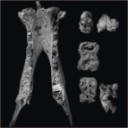
Rongeurs nouveaux de l'Oligocène Moyen d'Espagne.Louis ThalerPublished online: 15/09/1969Keywords: Cricetidae; Oligocene; Pseudocricetodon; Rodents; Theridomys https://doi.org/10.18563/pv.2.5.191-207 Abstract Description of four new rodents from a recently discovered locality at Montalban. Theridomys crusafonti nov. sp. is considered as the ancestry of T. Iembronicus. Theridomys varian: nov. sp. includes «Theridomys» morphotypes and «Blainvilllimys» morphotypes; it could be ancestral to B. blainvillei. Pseudoltinomys nanus nov. sp. represents a new lineage paralleling in evolution that of P. gaillardi (which is equally found at Montalban). Pseudocricetodon montalbanensis nov. gen., nov. sp. designates a lineage of very small Cricetidae accompanying Eucricetodon. With these well defined new species and six others present in the locality, Montalban appears as the best faunal reference point within the biochronologic zone of La Sauvetat. PV article infos Published in Vol. 02, Fasc. 5 (1969) |
|
|
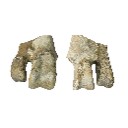
A new species of hippopotamine (Cetartiodactyla, Hippopotamidae) from the late Miocene Baynunah Formation, Abu Dhabi, United Arab EmiratesJean-Renaud Boisserie
Published online: 07/04/2017 |
S.I. Data |
|
A reassessment of the giant birds Liornis floweri Ameghino, 1895 and Callornis giganteus Ameghino, 1895, from the Santacrucian (late Early Miocene) of Argentina.Eric Buffetaut
Published online: 13/12/2016 |
|

|
La poche à phosphate de Ste-Néboule (Lot) et sa faune de vertébres du Ludien supérieur. 4- CrocodiliensEric Buffetaut
Published online: 25/09/1978 |
|

|
Rongeurs caviomorphes de l'Oligocène de Bolivie. 1 Introduction au deseadien de BolivieRobert HoffstetterPublished online: 01/08/1976Keywords: Rodentia; South America https://doi.org/10.18563/pv.7.3.1-16 Abstract The Tertiary of the Salla-Luribay basin consists of red beds affected by the second period of the andine compression, of Miocene ending age. The Tertiary layers are exposed at an approximate elevation of 3.500 to 4.000 meters. Two stratigraphic units can be distinguished in them: the Luribay conglomerates, in which vertical clifts result from erosion, and the Salla layers consisting mostly of consolidated clays. These clays are very fossiliferous and have furnished a rich vertebrate fauna which gave to R. Hoffstetter the possibility to establish the Oligocene age of these beds. Sediments of same age has been reported to be present in several other places of Bolivia, particularly near Lacayani, where have been collected highly hypsodont Rodents, different from those found in Salla-Luribay basin. PV article infos Published in Vol. 07, Fasc. 3 (1976) |
|

|
Nouvelle interprétation de l'évolution du genre Megacricetodon au cours du MiocèneJean-Pierre AguilarPublished online: 01/10/1980Keywords: Megacricetodon; Micromammals; Miocene https://doi.org/10.18563/pv.9.ext.355-364 Abstract La découverte de nouveaux gisements à micromammifères dans le Miocène du Sud de la France et d'Espagne montre que, s'il n'est plus possible d'accepter dans son intégralité le schéma phylétique de Fahlbusch du genre Megacricetodon, il existe toutefois des segments de lignées à l'intérieur de provinces géographiques différentes (Péninsule Ibérique, France, Europe Centrale), avec lesquels on peut établir une biochronologie locale, segments qu'il est aussi possible de placer les uns par rapport aux autres, en utilisant les corrélations que l'on peut reconnaître entre certains niveaux repères des mammalogistes et l'échelle stratigraphique marine. PV article infos Published in Vol. 9, Ext (1980) |
|

|
Préface au mémoire jubilaire en hommage à René LavocatJacques MichauxPublished online: 01/10/1980Keywords: Editorial https://doi.org/10.18563/pv.9.ext.1-13 Abstract Monsieur René Lavocat, Directeur du Laboratoire de Paléontologie des Vertébrés de la troisième section de l'Ecole Pratique des Hautes Etudes, quittait le service actif en l'année 1979. View editorial Published in Vol. 9, Ext (1980) |
|

|
Saturnin Garimond (1914-1987)Jean-Albert RemyPublished online: 15/11/1987Keywords: biography https://doi.org/10.18563/pv.17.3.151-154 Abstract Saturnin Garimond (1914-1987), naturaliste autodidacte né à Fons-outre-Gardon dans le Gard, a marqué la paléontologie et l'archéologie régionale par sa passion précoce pour les sciences naturelles. Quittant l'école à 10 ans, il s'instruit seul et explore inlassablement la garrigue, découvrant des sites préhistoriques dès 1930. Collaborant avec Camille Hugues, il fouille de nombreux gisements, dont la grotte de la Verrerie à Montmirat, révélant un outillage moustérien et des restes de néandertaliens. En 1961, il rejoint le Laboratoire de Paléontologie de Montpellier dirigé par Louis Thaler, contribuant à des fouilles majeures comme celle du gisement de Fons 4. En 1965, il permet la découverte du premier mammifère mésozoïque de France au gisement de Champ-Garimond. Membre de la Société Géologique de France, son érudition et sa collaboration ont enrichi de nombreuses recherches. Homme simple et affable, il a marqué tous ceux qui l'ont connu par son enthousiasme et ses connaissances encyclopédiques. PV article infos Published in Vol. 17, Fasc. 3 (1987) |
|

|
Un giraffidae dans le pliocène de Montpellier ?Claude GuérinPublished online: 31/10/1986Keywords: Artiodactyla; France; Giraffidae; Mammalia; Montpellier; Ruscinian https://doi.org/10.18563/pv.16.3.185-189 Abstract An upper giraffid premolar without any indication about its origin is preserved at the Montpellier University among numerous fossils from the ruscinian formation of Montpellier. It can be related to Samotherium, of the Upper Miocene in Eastern Europe, North Africa and Asia, or more probably to Bramatherium or Hydaspitherium of the Pliocene of South East Asia. The sedimentological study of the matrix shows a calcareous background, which may indicate that this tooth does not come from the Montpellier formation. PV article infos Published in Vol. 16, Fasc. 3 (1986) |
|

|
Ein neuer condylarthre und ein tillodontier (Mammalia) aus dem Mitteleozän des Geiseltales.Jens L. Franzen and Hartmut HauboldPublished online: 15/04/1986Keywords: Condylarthra; Eocene; Europe; Mammalia; taxonomy; Tillodontia https://doi.org/10.18563/pv.16.1.35-53 Abstract In the course of a revision of the Equoidea numerous dentitions as well as a partial skeleton of a Phenaeodont were discovered from the Middle Eocene lignite beds of the Geiseltal locality. These fossils are recognized as a new genus and species of Phenacodontidae : HaIlensia matthesi n.g. n.sp.. The species is present in the « untere und obere Unterkohle ›› (uUK, oUK = the lower and upper part of the Lower Coal Seam) as well as in the « obere Mittelkohle ›› (oMK = the upper part of the Middle Coal Seam). Two fragmentary upper jaws described and figured by Matthes (1977) as Propachynolophus gaudryi are also belonging to Hallensia matthesi. Thus the decisive argument for classifying the " Unterkohle " of the Geiseltal section as Lower Eocene has to be dropped. Another relict form of the Geiseltal is Esthonyx tardus n. sp. documented by a fragmentary mandible coming from the « untere Unterkohle ››. This is the latest Tillodont from Europe. Contrasting to E. munieri from the european Lower Eocene the dentition of E. tardus is morphologically more progressive. PV article infos Published in Vol. 16, Fasc. 1 (1986) |
|

|
Les Amphibiens et les reptiles du Pliocène supérieur de Balaruc II (Herault, France)Salvador Bailon
Published online: 15/09/1989 |
|

|
Une nouvelle espèce de Steneosaurus (Thalattosuchia, Teleosauridae) dans le Callovien du Poitou (France) et la systématique des Steneosaurus longirostres du Jurassique moyen d'Europe Occidentale.Patrick Vignaud
Published online: 15/09/1998 |
|

|
Un crane de Chalicothere (Mammalia, Perissodactyla) du Miocène supérieur de Macédoine (Grèce) : remarque sur la phylogénie des ChalicotheiinaeLouis de Bonis
Published online: 14/06/1995 |
|

|
A new Ardynomys (Rodentia,Cylindrodontidae) from the Eocene of the eastern Gobi Desert, Mongolia.Demberelyin DashzevegPublished online: 16/12/1996Keywords: Ardynomys; Eocene; Mongolia; Rodentia; Systematics https://doi.org/10.18563/pv.25.2-4.339-348 Abstract A partial skull of Ardynomys russelli sp. nov. (Rodentia, Cylindrodontidae) is described. This was collected in the late Eocene of Alag Tsab locality in the eastem Gobi Desert, Mongolia. Ardynomys russelli sp. nov. is characterized by small size, brachyodont molars, and retention of P3. It represents the earliest record of the genus Ardynomys MATTHEW & GRANGER, 1925, in Asia. PV article infos Published in Vol. 25, Fasc. 2-4 (1996) |
|

|
Long-term fidelity of megaoolithid dinosaurs to a large breeding-ground in the Upper Cretaceous of Aix-en-Provence (southern France).Géraldine Garcia
Published online: 15/12/2003 |
|

|
Sur le remplissage des "poches à phosphorite" d'Aubrelong (commune de Bach, Lot)Bernard GèzePublished online: 15/11/1974Keywords: Aubrelong; Quercy Phosphorites https://doi.org/10.18563/pv.6.1-2.21-25 Abstract L’article analyse les poches à phosphorite d’Aubrelong (Quercy), comparant les fouilles de 1937 (Éocène supérieur) et celles des années 1967-1970 (Oligocène inférieur), révélant une stratification contrastée : argiles brunes pauvres en fossiles en surface, et argiles rouges riches en phosphates et faune en profondeur. Les analyses géochimiques confirment une origine latéritique sous climat tropical humide, avec des remplissages tantôt stratifiés, tantôt chaotiques, remettant en cause l’hypothèse d’une progression chronologique uniforme des dépôts PV article infos Published in Vol. 06, Fasc. 1-2 (1974) |
|

|
Analyse d'ouvrage: “J.J. THOMASON (Ed.): Functional morphology invertebrate paleontology (1995)”Jacques MichauxPublished online: 18/03/1996Keywords: Book review; Functional morphology https://doi.org/10.18563/pv.25.1.54-55 Abstract Functional morphology invertebrate paleontology, édité par Jeffrey J. THOMASON, 1995. Cambridge University Press, xi + 277 p. ISBN 0-521-44095-5, f. 45,00 ($ 69,95). PV article infos Published in Vol. 25, Fasc. 1 (1996) |
|

|
Mammals and stratigraphy : the Paleocene of EuropeDonald E. Russell, Jean-Louis Hartenberger, Charles Pomerol, Sevket Sen
Published online: 01/12/1982 |
|
