Current issue


2025-12
48-2
<< prev. next >>

Print ISSN: 0031-0247
Online ISSN:
2274-0333
Frequency: biannual

Article Management

You must log in to submit or manage articles.

You do not have an account yet ? Sign up.

Most downloaded articles (last month)


Page 18 of 19, showing 20 record(s) out of 365 total

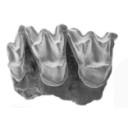
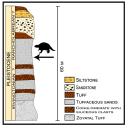
Cricetid and arvicolid rodents of the California wash local fauna, late Blancan of the san Pedro Valley, Arizona.
Cristiana Mezzabotta
Published online: 15/12/1997

Keywords: Arvicolidae; Blancan; Cenozoic; Cricetidae; Mammals

  Abstract

    An assemblage of micromammals is reported from California Wash, a fossil bearing continental deposit in the San Pedro Valley, Arizona, late Blancan in age. Cricetid and Arvicolid rodents are richly represented, including four and two species, respectively. This study mainly focuses on Sígmodon, the most abundant form. The sample of Sigmodon is compared to samples of the same genus from other localities of the San Pedro Valley of comparable age, and some inferences on the taxonomy of the genus are attempted. The specimens are referred to Sigmodon minor and Sigmodon cf. S. curtisi. Other cricetids (Onychomys pedroensis and Baiomys brachygnathus) and arvicolids (Mictomys vetus and Ondatra ídahoensis) are also recognized and described. 


  PV article infos

Published in Vol. 26, Fasc. 1-4 (1997)

PDF
Evolution et extinction des reptiles marins au cours du Mésozoïque.
Nathalie Bardet Logo
Published online: 02/10/1995

Keywords: Crocodiles; evolution; Extinctions; faunal assemblages; Helveticosaurs; Hupehsuchians; Ichthyoaurs; lizards; Marine Reptiles; Mesozoic; Nothosaurs; Pachypleurosaurs; Placodonts; Plesiosaurs; Snakes; Thalattosaurs; Turnovers; Turtles

  Abstract

    An interpretation of the marine reptile fossil record, based on the existing litterature and complemented by the review of ancient collections and the study of new material, permits a better understanding of Mesozoic marine ecosystems. An inventory of the marine reptiles known from the Lower Triassic to the Paleocene is presented: 46 families, about 200 genera and 400 species have been recorded. This data base includes commentaries about systematics, stratigraphical ranges and geographical distribution of taxa. Marine reptiles include a mosaic of not necessarily closely related groups: ichthyosaurs, thalattosaurs, hupehsuchians, pachypleurosaurs, placodonts, nothosaurs, plesiosaurs, pliosaurs but also crocodiles, lizards, snakes, turtles. The diversity studies reveal that the fossil record of marine reptiles has been punctuated by two mass extinctions, during the Middle-Upper Triassic transition and at the Cretaceous-Tertiary boundary. The Jurassic-Cretaceous and Cenomanian-Turonian boundaries (the latter marked by the disappearance of ichthyosaurs) are potential crisis periods, but current data are not sufficient to reach conclusions. The Ladinian-Carnian transition is characterized by the disappearance of 64 % of families and affects essentially coastal forms. This extinction coincides with an important regressive phase. During the Upper Triassic, a faunal reorganisation within marine reptiles leads to the progressive disappearance of near-shore forms and to the development of pelagic groups. During the Maastrichtian-Danian crisis, 36% of families died out. Large-sized pelagic forms such as mosasaurs and elasmosaurs were the most affected and their extinction seems to have been rather sudden. On the other hand, pliosaurs and protostegid turtles became extinct, but were already declining. The survivors were near-shore forms such as crocodiles, snakes and some turtles and they may have taken refuge in freshwater environments. A break in the food chain based on phytoplankton is proposed as an extinction scenario for pelagic forms.


  PV article infos

Published in Vol. 24, Fasc. 3-4 (1995)

PDF
Koobi Fora Research Project, volume 3. The fossil ungulates: geology, fossil artiodactyls, and palaeoenvironments, édité par John Michael HARRIS, 1991. Clarendon Press, Oxford, xvi + 384 p. ISBN 0-19-857399-5.
Jean Sudre
Published online: 11/02/1993

Keywords: Artiodactyls; palaeovenvironments; Ungulates

  Abstract

    Avec ce volume se clôture l'étude géologique et paléontologique des sites à hominidés de Koobi Fora. Il fait suite aux deux précédents ouvrages, parus respectivement en 1978 et 1983, consacrés également à l'étude des faunes recueillies sur ces gisements dans le cadre du Koobi Fora Research Project. 


  PV article infos

Published in Vol. 22, Fasc. 2-3 (1993)

PDF
Repartition et dynamisme des faunes de Lacertilia et d'Amphisbaenia dans l'Eocène Europe
Marc Augé
Published online: 11/02/1993

Keywords: Amphisbaenia; climate; Endemism; Eocene; Europe; Lacertilia; Metabolism

  Abstract

    The composition of assemblages of lizards and Amphisbaenian from the European Eocene are described. At least ten lizard families are identified from the lower European Eocene levels. Eight are still recorded in the last level (Escamps) of the late Eocene. Agamid lizards (genus Tinosaurus) died out by the end of the lower Eocene and Varanid lizards (genus Saniwa) disappeared by the beginning of the late Eocene. Amphisbaenians are recorded throughout the Eocene in Europe. The lacertilian fossil record of Europe and North America show a high degree of faunal resemblance in the early Eocene, followed by a decrease during the later part of the epoch. The lacertilian and amphisbaenian faunas from the European Eocene are not subject to great variations during the period; this is in contrast with the mammal record at the same time. It is argued that the low metabolic rates and the ectothermy of lizards could explain those differences, along with the increasing insularity of the West European area during the late Eocene time.


  PV article infos

Published in Vol. 22, Fasc. 2-3 (1993)

PDF
A.J.Sutcliffe. On the track of Ice Age mammals
Jacques Michaux
Published online: 30/12/1985

Keywords: Book review

  Abstract

    On the Track of Ice Age Mammals justifie pleinement son titre car l'auteur, Anthony J. Sutcliffe, apporte au lecteur faits et interprétations qui l'amèneront à s'intéresser encore plus au passé récent et à l'avenir de son environnement et à la question de l'impact de l'homme sur la nature. Après les chapitres qui présentent les temps glaciaires et les divers témoignages qui nous en sont parvenus, les cinquième et sixième apportent les informations nécessaires à la compréhension des résultats que nous donnent les chercheurs: principes, moyens d'étude et limites des méthodes, difficultés de l'intégration des données dans un cadre stratigraphique, variabilité des signaux climatiques, variabilité de leur intensité selon l'endroit par rapport au centre de la glaciation, complications liées à la qualité inégale de l'enregistrement géologique, en mer et sur le continent. 


  PV article infos

Published in Vol. 15, Fasc. 4 (1985)

PDF
Evolution of the Rhizomyine zygoma
Lawrence J. Flynn Logo, Mohammed Sarwar and Jean-Jacques Jaeger Logo
Published online: 30/12/1985

Keywords: parallel evolution; Rhizomyidae; Rodentia; Siwalik; zygoma

  Abstract

    Cranial anatomy of a late Miocene rhizomyid, Brafhyrhizomys cf. B. pilgrimi, provides new evidence on the origin of the dorsal, round infraorbital foramen of living rhizomyines. Primitive rhizomyids retain a myomorphous keyhole foramen with a long ventral slit that retracts upward during the evolutionary history of the Rhizomyidae. The primitive condition of the elongated ventral slit is represented by Kanisamys sivalensis. Among later burrowers the foramen shows progressive dorsal migration, the ventral slit terminating midway up the snout in B.tertracharax and B. choristos ; well above the midline of the snout in Brachyrhizamys cf. B. pilgrimi. Apparently this transformation began earlier among Rhizomyinae than among Tachyoryctinae and continued to a more derived stage in rhizomyines. ln living Rhizomyx the ventral slit is absent and only a high round hole remains at the anterior end of the zygomatic arch. 


  PV article infos

Published in Vol. 15, Fasc. 3 (1985)

PDF
Handbuch der Paläeoherpetologie Teil 11: Serpentes
Jacques Michaux
Published online: 15/11/1984

Keywords: Book review

  Abstract

    Le volume 11 du «Handbuch der Paläeoherpetologie», consacré aux «Serpellles» et redigé par Jean-Claude Rage, apporte une remarquable information sur ce groupe particulier de reptiles dont on ne pouvait guere se faire une idée très précise à partir, par exemple, des seuls chapitres des traités classiques de Paléontologie et de Zoologie. 


  PV article infos

Published in Vol. 14, Fasc. 3 (1984)

PDF
Multituberculate endocranial casts
Zofia Kielan-Jaworowska Logo
Published online: 30/06/1983

Keywords: Allotheria; Cretaceous; endocranial cast; Mongolia; multituberculates

https://doi.org/10.18563/pv.13.1-2.1-12

  Abstract

    A reconstruction of a multituberculate endocranial cast is made on the basis of a complete natural cast prepared from the skull of Chulsanbaatar vulgaris, and other less complete endocasts, all from the Late Cretaceous of Mongolia. The multituberculate endocast is of mammalian pattern but it has retained a therapsid-like lateral profile with a deep rhombencephalon and a shallow telencephalon. It is characterized by: a heart-shaped cross-section of the telencephalon; an extensive lissencephalic neocortex; a very prominent pons placed far anteriorly; a lack of cerebellar hemispheres, and very large paraflocculi. Its structure, very different from the brains of other mammals, suggests thats the Multituberculata branched very early from the main mammalian stock. This supports Simpson's (1945) idea that the Multituberculata should be placed in a subclass of their own: Allotheria MARSH. The endocast and braincase structure show that the Multituberculata had strongly developed senses of smell and hearing. The encephalization quotient of approx. 0.55 evaluated for Ch. vulgaris is relatively high for a Mesozoic mammal. 


  PV article infos

Published in Vol. 13, Fasc. 1-2 (1983)

PDF
Les mammifères Montiens de Hainin (Paléocène moyen de Belgique) Part II : Les Condylarthres
Jean Sudre and Donald E. Russell
Published online: 30/12/1982

Keywords: Belgium; Condylarths; Louisininae; Oxyclaeninae; Paleocene

https://doi.org/10.18563/pv.12.6.173-184

  Abstract

    The Condylarths from Hainin (Hainault, Belgium) show no affinity at the generic level to those known in other Paleocene localities of Europe and North America ; they are described as new forms : Monshyus praevius n. gen., n. sp. and Prolatidens waudruae n. gen., n. sp. Monshyus praevius, discovered in only one of the levels in the excavation at Hainin, is similar to the genera Microhyus TEILHARD and Louisina RUSSELL ; with them it is included in the subfamily Louisininae (Hyopsodontidae). With respect to Microhyus and Louisina, Monshyus is distinguished by the precociously modern aspect of its upper molars, the only teeth that are referable. Prolatidens waudruae, known only by lower molars, was found in several levels in the pit at Hainin. It is an arctocyonid presenting possible relationships to the North American form Oxyprimus galadrielae ; it therefore has been provisionally attributed to the subfamily Oxyclaeninae. If this attribution is confirmed, this species will constitute the first and only representative of the group in Europe. 


  PV article infos

Published in Vol. 12, Fasc. 6 (1982)

PDF
Avant-propos
Marc Godinot Logo and Phillip D. Gingerich Logo
Published online: 16/12/1996

Keywords: D.E.Russell

  Abstract

    Le présent volume est l'aboutissement d'un projet né il y a presque cinq ans. En décembre 1991, l'un d'entre nous (MG) prenait des contacts en vue de proposer un symposium sur les mammifères fossiles, dédié à D.E. Russell, dans le programme du 4e Congrès de la European Society for Evolutionary Biology. Ce congrès, baptisé "Evolution 93", devait se tenir à Montpellier en août 1993. Son Comité d'Organisation, animé par F. Catzeflis, recherchait des organisateurs de symposiums. L'idée fut acceptée avec enthousiasme par le second d'entre nous (PDG), et le titre de notre Symposium fut précisé: " Palaeobiology and Evolution of Early Cenozoic Mammals - A Symposium in Honor of D.E. Russell". Le projet fut formellement accepté par le Comité d'Organisation en avril 1992. 


  PV article infos

Published in Vol. 25, Fasc. 2-4 (1996)

PDF
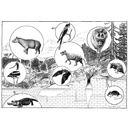
Essai de reconstitution d'un paysage du Quercy vers -35 Ma. (Esquisse de Christian Pondeville, 1977).
Monique Vianey-Liaud Logo and Christian Pondeville
Published online: 15/09/1978

Keywords: Landscape reconstruction; Quercy Phosphorites

https://doi.org/10.18563/pv.8.2-4.landscape

  Abstract

    Le Quercy est aujourd'hui un vaste plateau calcaire, parcouru par un réseau karstique actif, pro· fondément entaillé par des vallées aux falaises abruptes, comme celles du Lot ou du Célé. Sur un sol peu épais domine la forêt de chênes, accompagnés de cornouillers, érables, genévriers. La faune est pauvre, peu diverse, et les nombreux chasseurs se satisfont de gibier d'élevage ...
    Il y a trente-cinq millions d'années environ, le paysage était bien différent. La période de l'Eocène supérieur, qui s'achevait, avait été chaude et humide, si l'on se réfère à la fois aux paléotempératures (calculées à partir de sédiments marins extra-européens) et aux restes fossilisés de végétaux typiquement tropicaux.
    Le Causse du Quercy devait être un plateau très disséqué par la karstification, à surface lapiazée creusée de gouffres en rapide évolution interne, et couvert d'un sol assez épais. Une forêt tropicale humide, avec notamment des Myricacées et des gymnospermes, recouvrait l'ensemble du pays, à peine interrompue au niveau des rares points d'eaux situés dans les bas-fonds. Dans ce cadre vivait une faune considérablement différente de la maigre faune actuelle. Si nous pouvons l'imaginer, c'est grâce aux cadavres des animaux entraînés dans les cavités par les eaux courantes ou les prédateurs, ou bien logeant et mourant dans les milieux souterrains. Nombre de ces restes, fossilisés, sont parvenus jusqu'à nous et sont aujourd'hui l'objet d'étude. 


  View editorial

Published in Vol. 08, Fasc. 2-4 (1978)

PDF
Die Ohr-Region der Paulchoffatiidae (Multituberculata, Ober-Jura).
Gerhard Hahn
Published online: 15/11/1988

Keywords: Multituberculata; Ober-Jura; Paulchoffatiidae; Petrosum; Portugal

  Abstract

    The petrosal of the Paulchoffatiidae HAHN, 1969 is described and compared with that of younger multituberculates and of other Mesozoic mammals. The "Morrison petrosal", described by Prothero (1983), is also discussed; it probably belongs to the multituberculates. The reconstruction of the ventral side of the Paulchoffatiinae-skull, given by Hahn in 1987, is completed by addition of the otic and the occipital region. 


  PV article infos

Published in Vol. 18, Fasc. 3 (1988)

PDF
Pronycticebus neglectus - an almost complete adapid primate specimen from the Geiseltal (GDR)
Urs Thalmann, Hartmut Haubold and Robert D. Martin
Published online: 04/12/1989

Keywords: Adapiformes; Eocene; Paleoecology; PHYLOGENY; Pronycticebus neglectus

  Abstract

    In the course of the current revision of adapid primates from the Eocene Geiseltal, an almost complete specimen was found in the Geiseltal Museum collections. The fossil, the most complete adapid specimen so far discovered in Europe, has been determined as Pronycticebus neglectus n. sp.
    Ecology and locomotion as well as the likely phylogenetic position within the infraorder Adapiformes are discussed. 


  PV article infos

Published in Vol. 19, Fasc. 3 (1989)

PDF
Decouverte d'un nouveau Diacodexis (Artiocactyla, Mammalia) dans l'Eocène inférieur de Silveirinha, Portugal.
Carmen Estravis and Donald E. Russell
Published online: 15/09/1989

Keywords: Artiodactyla; Eocene; Migration; Portugal; Silveirinha

  Abstract

    A new artiodactyl, Diacodexis antunesi n.sp., is described from the early Eocene of Silveirinha, Portugal. Comparisons are made with Diacodexis gazini GODINOT, 1978, D. varleti SUDRE et al., 1983, D. cf. varleti from Paris Basin sites, D. sp. from Dormaal and from localities in Spain and England, D. secans from North America and D. pakistanensis from Asia; affinities and evolutive tendencies are discussed. The presence of Diacodexis in the locality of Silveirinha confirms the very early Eocene age of the latter. As Diacodexis antunesi appears ta be more primitive than D. gazini from Rians (early Eocene of France), it lends corroboration to the interpretation (essentially based previously on condylarths) of the Silveirinha assemblage as the oldest Eocene fauna known in Europe and supports the hypothesis that early artiodactyls migrated from Europe to North America. 


  PV article infos

Published in Vol. 19, Fasc. 1 (1989)

PDF
Palaecarcharodon orientalis (Sinzow) (Neoselachii : Cretoxyrhinidae), from the Paleocene of maryland, USA.
Gerard R. Case
Published online: 15/09/1989

Keywords: Maryland; Palaeocarcharodon; Paleocene; Selachian; Systematics; U.S.A.

  Abstract

    Recent collecting of fossil vertebrate remains from the lowermost member of the Aquia Formation (Paleocene), has enabled me to report here for the very fIrst time, the earliest occurrence for the teeth of Palaeocarcharodon in the fossil record of the New World.
    This report represents only one species of neoselachian from this locality, the remaining fauna of which will subsequently be described. 


  PV article infos

Published in Vol. 19, Fasc. 1 (1989)

PDF
Les Ischyrictis de la transition Vindobonien-Vallésien
Miquel Crusafont i Pairó
Published online: 15/09/1972

Keywords: Ischyrictis; Mustelidae

https://doi.org/10.18563/pv.5.5.253-260

  Abstract

    Le groupe des Mustélides « Ischyrictoïdes » développe des tendances évolutives qu’engendrent des formes de Carnassiers prédateurs robustes et de grande taille. C’est une évolution comparable à celle que l’on trouve chez Plesiogulo, qui, lui, a une origine énigmatique (Petter, 1963). Chez les Mustélides on peut signaler deux lignées assez nettes : celle du sous-genre nominal des Laphyctis, plus conservatrice, plus mustéliforme, renfermant les espèces Ischyrictis (Laphyctis) mustelinus VIRET et L. zibethoides BLAINVILLE ; celle de type félinoïde caractérisée par L. Ginsburg (1961) avec la forme type Ischyrictis (Hoplicitis) florancei du Vindobonien inférieur de Pontlevoy-Thenay et I. helbingi VIRET, 1951 du Vindobonien supérieur de la Grive Saint-Alban. De plus rappelons que I. vorax DEHM et I. comitans DEHM du Burdigalien de Wintershof-West sont sans rapport avec les espèces du Miocène supérieur (Ginsburg, o.c.).

    Récemment G. Petter (o.c.) a montré la difficulté qu’il y avait à envisager que l’Ischyrictis de Can Llobateres qu’elle décrivait puisse être le descendant de Ischyrictis helbingi de La Grive : la forme plus récente est évidemment de plus grande taille, mais le développement très marqué et la position avancée du protocône paraissent constituer un obstacle à une telle filiation.

    Donc on signalait jusqu’ici deux lignées de Mustélides « ischyrictoïdes » toutes deux de grande taille : d’une part I. zibethoides de Sansan, d’autre part I. helbingi de la Grive. Or à notre point de vue nous considérons actuellement qu’il existe très probablement trois phyla d’Ischyrictis. Le premier serait représenté par les formes burdigaliennes déjà nommées I. vorax et I. comitans ; il se caractériserait par la perte précoce de la P₁ inférieure et la forme spéciale de la canine inférieure. Ce premier ensemble pourrait être rassemblé dans le sous-genre Laphyctis. Le reste des ischyrictoïdes de type conservateur, pour ce qui est de la région des prémolaires et de la forme de la canine, pourrait être subdivisé en deux sous-genres : le sous-genre Ischyrictis désignant les formes les plus mustéliformes avec I. mustelinus et I. zibethoides d’une part, et le sous-genre Hoplicitis pour les formes félinoïdes avec I. florancei et I. helbingi


  PV article infos

Published in Vol. 05, Fasc. 5 (1972)

PDF
Owls, caves and fossils. Predation, preservation and accumulation of small mammal bones in caves, with an analysis of the Pleistocene cave faunas from Westbury-Sub-Mendip, Somerset, UK, par Peter Andrews, 1990. The University of Chicago Press, 232 p.
Christiane Denys Logo
Published online: 17/12/1992

Keywords: caves; owls; preservation; taphonomy

  Abstract

    La taphonomie (science de l'enfouissement et de la fossilisation) des micromammifères a trop souvent été négligée par rapport à celle des grands mammifères. Or, pour expliquer les concentrations parfois très importantes de microfossiles dans les grottes et les sites préhistoriques il faut connaître les mécanismes qui concourrent actuellement à favoriser les accumulations de ces derniers. C'est le but de l'ouvrage de Peter Andrews qui se décompose en deux parties. 


  PV article infos

Published in Vol. 22, Fasc. 1 (1992)

PDF
Premier catalogue des specimens-types Paléontologiques déposés dans les collections de l'Université de Montpellier II (Sciences et Techniques du Languedoc)
Bernard Marandat
Published online: 20/12/1994

Keywords: Collections; Inventory; Type specimens; University Montpelllier II

  Abstract

    More than 400 paleontological type-specimens housed in the Montpellier University collections have been inventoried in this catalogue which includes charophytes, Paleozoic plants, brachiopodes, molluscs, arthropodes and vertebrates (selachians, amphibians, reptiles, birds and mammals). The vertebrates have been treated exhaustively in the catalogue and one can consider that it includes most of the type specimens deposited in the Montpelier II collections. 


  PV article infos

Published in Vol. 23, Ext (1994)

PDF
A new hypothesis for the origin of African Anomaluridae and Graphiuridae (Rodentia)
Monique Vianey-Liaud Logo and Jean-Jacques Jaeger Logo
Published online: 16/12/1996

Keywords: Africa; Anomaluridae; Gliridae; Graphiuridae; Paleontology; PHYLOGENY; Rodentia

  Abstract

    A new hypothesis for the phylogenetic relationships of recent anomalurids and graphiurids is proposed, based on information from evolutionary lineages of Paleogene European rodents, particularly Gliridae, and Eocene Algerian Zegdoumyidae. Differences in first occurrences, in paleogeography, and in infraorbital structure in glirids (protrogomorphy and pseudomyomorphy) and graphiurids (hystricomorphy) separate Graphiuridae from Gliridae (Graphiurinae is here raised to family rank). Similar considerations, and dental morphology, suggest that Anomaluridae (appearing in the late Eocene) and Graphiuridae (appearing in the Pliocene) are related to early Eocene Zegdoumyidae. 


  PV article infos

Published in Vol. 25, Fasc. 2-4 (1996)

PDF
Mammoths, mastodonts & elephants. biology, behavior and the fossil record

Gary HAYNES, 1992. Cambridge University Press, New York, xii + 413 p., ISBN 0-521-38435-4
Jean-Loup Welcomme
Published online: 11/02/1993

Keywords: Elephants; Mammoths; Mastodonts

  Abstract

    L'ouvrage est divisé en trois grandes parties traitant successivement: I. l'anatomie ("Proboscidean flesh and bones"), en abordant la taxonomie, l'allure générale et l'éco-éthologie des proboscidiens actuels et fossiles; II. les causes de mortalité collective naturelle et provoquée chez les actuels; III. les documents fossiles et l'extinction des formes anciennes d'Amérique du Nord. 


  PV article infos

Published in Vol. 22, Fasc. 2-3 (1993)

PDF

Page 18 of 19, showing 20 record(s) out of 365 total