

Abstract book of the 18th Conference of the EAVP
Miocene Bovidae (Mammalia) of the Siwaliks: Hypsodontinae and Bovinae
Pterosaurs from Coahuila
Les sélaciens du Miocène de la région de Montpellier
Contribution à l'étude des genres Gliravus et Microparamys.
Muridae du Pliocène supérieur d'Espagne et du midi de la France.
Eocene (57) , Quercy Phosphorites (38) , Systematics (32) , Rodents (29) , Mammalia (27) , Rodentia (25) , Miocene (25)
Page 11 of 19, showing 20 record(s) out of 368 total

|
Les gangas (Aves, Columbiformes, Pteroclidae) du Paléocène et du Miocène inférieur de France.Cécile Mourer-Chauviré
Published online: 11/02/1993 |
|

|
Cryptomerix Schlosser, 1886, Tragulidé de l'oligocène d'Europe ; relations du genre et considérations sur l'origine des ruminants.Jean SudrePublished online: 01/06/1984Keywords: Archaic Ruminants; Paleobiogeography; Quercy Phosphorites; Systematics; Tragulids https://doi.org/10.18563/pv.14.1.1-31 Abstract The genus Cryptomeryx SCHLOSSER, 1886, inusited during a long period, has been discovered in Lower and Middle Oligocene localities of the Quercy region (South-West France). This new material, as well as specimens from the old collections referred to Cryptomeryx, are described; their study, allows us precising the definition of the genus, and confirming its allocation to the Tragulidae family. The type species of the genus, Crypmmeryx gaudryi (= Lophiomeryx gaudryi FILHOL, 1877), occurs in several localities at the base of the Middle Oligocene (Itardies, La Plante 2, Roqueprune 2, Soulce, Herrlingen 1). The new species C. matsoui n. sp. has been defined in the older locality of Mas de Got (top of Lower Oligocene). It is possible that the species Pseudamphimeryx decedens STEHLIN, 1910 pertains to the same genus. Also to the Tragulids must be referred the monospecific genus Iberomeryx (I. parvus GABOUNIA, 1964) from Upper Oligocene of Benara (Georgie, URSS), with which Cryptomeryx is related. These genera are not direct ancestors of Miocene tragulids; their occurrence in the Western European Oligocene results from a first immigration wawe of the family. These Tragulids are one of the most archaic groups of Ruminants. They are probably derived from a primitive stock which had acquired in Asia the selenodont condition of the dentition. PV article infos Published in Vol. 14, Fasc. 1 (1984) |
|

|
Etude de la Variabilité chez Lophiodon lautricense NouletJean SudrePublished online: 28/02/1971Keywords: Cheek teeth; Eocene; Lophiodon; variability https://doi.org/10.18563/pv.4.3.67-95 Abstract The biometric and morphologie variability of the cheek teeth in the end-of-the-phylum species Lophiodon lautricense Noulet studied in this note, reposes on the observation of about 800 teeth. These were revealed to be little variable in absolute dimensions. The considerable morphologie variability in the upper premolars permitted the problem of the molarization process to be taken up. An hypothesis concerning the order of eruption of the cheek teeth is formulated based on an examination of a large number of milk dentitions. In conclusion, it is suggested that reservations be held on the value of dental characters classically used in systematics for the group under consideration. PV article infos Published in Vol. 04, Fasc. 3 (1971) |
|
|
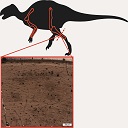
Comparative bone histology of rhabdodontid dinosaursEdina Prondvai
Published online: 17/11/2014 |
|
|
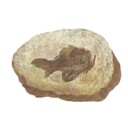
Designating a lectotype for Mesacanthus pusillus (Gnathostomata: Acanthodii)Matthew G. Baron
Published online: 03/03/2021 |
S.I. Data |
|
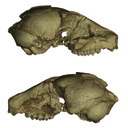
The digital endocast of Necrolemur antiquusArianna Harrington
Published online: 24/07/2020 |
|
|
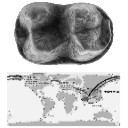
First early Eocene tapiroid from India and its implication for the paleobiogeographic origin of perissodactylsThierry Smith
Published online: 08/09/2015 |
|

|
Un gisement à mammifères dans la formation lacustre d'âge Miocène moyen du Collet Redon près de St-Cannat (Bouches-du-Rhone). Implications stratigaphiquesJean-Pierre Aguilar and G. ClauzonPublished online: 10/04/1979Keywords: France; Neogene; Rodentia https://doi.org/10.18563/pv.8.5.327-341 Abstract The new fauna of Collet Redon (Bouches-du-Rhône, France) is dated by three rodents: Megacricetodon aff. bavaricus, Democricetodon affinis mutilus and Peridyromys cf. hamadryas. They correlate this locality with Oggenhof and Ohningen in Bavaria (Western Germany). As the radiometric age of Ohningen is estimated between 14 and 13 M.Y., these three localities are of Serravallian age. This datation brings a complete readjusment of the stratigraphy of the section of Collet Redon formerly described by Collot and Combaluzier. The marine deposits with underly the continental formation with the mammal fauna, are Burdigalian. The angular unconformity between the marine and the continental deposits gives evidence of an episode of emersion on the margin of a sedimentary basin, with deformation and erosion. Owing to the newly discovered fauna, this geodynamical event is clearly settled within the regional geographical and chronological context. Lacustrine and continental deposits of such an age were up to now unsuspected in this area. PV article infos Published in Vol. 08, Fasc. 5 (1979) |
|

|
Les Dipodidae (Mammalia, Rodentia) d'Europe occidentale au Paléogène et au Néogène inférieur: origine et évolution.Marguerite Hugueney and Monique Vianey-Liaud
Published online: 01/10/1980 |
|

|
L'occlusion dentaire chez Peradectes, Amphiperatherium et Peratherium, Marsupiaux du tertiaire d'Europe.Jean-Yves CrochetPublished online: 01/10/1980Keywords: Didelphidae; Eocene; Mastication; Oligocene; Wear facets https://doi.org/10.18563/pv.9.ext.79-89 Abstract The general principles guiding the study of wear facets which develop during mastication in mammals possessing tribosphenic molars are named. The application of this method of study to the molars of European Tertiary Didelphidae shows that the lineage of this family as represented by the species Peratherium cuvieri (Upper Eocene), P. elegans (Lower-middle Oligocene) and P. antiquum (Upper Oligocene) has propessively evolved toward a more carnivorous diet. PV article infos Published in Vol. 9, Ext (1980) |
|

|
Analysis of changing diversity patterns in Cenozoic land mammal age faunas, South AmericaLarry G. Marshall and Richard L. CifelliPublished online: 30/03/1990Keywords: Cenozoic; Chronofaunas; diversity; Equilibrium theory; Extinction; Land mammal faunas; Origination; South America https://doi.org/10.18563/pv.19.4.169-210 Abstract Comparison of various measurements of taxonomic evolution using stratigraphic range data for orders, families and genera of land mammals indicates several means by which deficiencies of the South American fossil record (e.g., presence of hiatuses, unequal temporal and geographic representation of ages, unequal systematic treatment) may be normalized, thus permitting a less distorted appreciation of diversity pattern and trend. Initial radiation of native taxa resulted in a relative equilibrium by early Eocene time. Subsequent increases in absolute diversity were apparently induced by immigration at the family level and by environmental factors at the generic level. Miocene through Pleistocene phases of faunal stability, herein characterized as chronofaunas, are punctuated by rapid turnover events resulting from a complex of factors, including adaptive radiation of immigrant taxa into unoccupied eco-space; environmental and concomitant habitat change induced by orogenic events of the Andes; and biotic interactions between native and immigrant taxa, including competition and prey naivete. The first two factors account for major faunal transitions in the South American middle and late Tertiary; immigration-induced turnover may have been of greater importance in shaping the character of the fauna upon the Great American Interchange and the arrival of man in the Neotropics PV article infos Published in Vol. 19, Fasc. 4 (1990) |
|

|
Insectivores pliocènes du Sud de la France (Languedoc-Roussillon) et du Nord-Est de l'Espagne.Jean-Yves CrochetPublished online: 31/10/1986Keywords: Biostratigraphy; Insectivora; Languedoc; Pliocene; Spain; Systematics https://doi.org/10.18563/pv.16.3.145-171 Abstract The first lists of Insectivores (Erinaceidae, Talpidae and Soricidae) from the Pliocene beds of Southern France and North-East Spain are given in this paper. The material from twelve localities is studied. These localities are geographically situated in Languedoc (Celleneuve, Vendargues, Nîmes, Sète, Balaruc 2 and Seynes), in Roussillon (Terrats, Serrats-d'en-Vacquer, Château d'eau and Mont-Hélène) and in North-East Spain (Layna, Medas Islands and Puebla de Valverde). These faunas correspond to the Early, Middle and Late Pliocene. 1 to 8 taxa are identified in these localities and 14 specific taxa are presently listed for this period in this area. Two new specific taxa are described as Galerix depereti nov. sp. from all the Early Pliocene localities in the North-Pyrenean area and as Desmanella gardiolensis nov. sp. from Balaruc 2. For this small mammals, two faunal assemblages are recognized. The first one is dated from the Early Pliocene (F 1, 2 and 3 zones in Aguilar et Michaux) and is characterized by Galerix depereti and rare and little diversified Soricids. The second one is Late Pliocene in age (zones G 2 and G 3). The fossils of the genus Talpa are relatively abundant and the Soricids are diversified and very abundant. The Middle Pliocene (zone G 1) is a transitional period. ln these faunas, most of the insectivore genera are known from the European Late Miocene beds (8 on 10). This fact demonstrates a relative continuity between the invectivore faunas from the Late Miocene to the Early Pliocene. In conclusion, somme paleoecological considerations are suggested. PV article infos Published in Vol. 16, Fasc. 3 (1986) |
|

|
Contributions à l'étude du gisement Miocène supérieur de Montredon (Hérault). Les grands mammifères. 10 - Conclusions généralesJacques MichauxPublished online: 15/11/1988Keywords: Mammalia; Montredon; Upper Miocene https://doi.org/10.18563/pv.18.ext.189-192 Abstract Le présent volume traite des lagomorphes, carnivores, artiodactyles, périssodactyles et proboscidiens de la faune de Montredon (Hérault). Il clôt la monographie de ce célèbre gisement d'âge miocène supérieur du Languedoc, dont la première partie, relative aux rongeurs, insectivores et chiroptères, fut publiée en 1982. PV article infos Published in Vol. 18, Ext (1988) |
|

|
Contributions à l'étude du gisement Miocène supérieur de Montredon (Hérault). Les grands mammifères. 4 - Les artiodactyles Suidae.Léonard GinsburgPublished online: 15/11/1988Keywords: Artiodactyla; France; Mammalia; Montredon; Upper Miocene https://doi.org/10.18563/pv.18.ext.57-64 Abstract There is only one suid known in the Upper Miocene of Montredon (Hérault): Microstonyx (Limnostonyx nov. subgen.) antiquus (KAUP). It is differenciated from Microstonyx major by the presence of upper and lower canines which are considerably longer and biger. Its presence at Montredon corroborates the palustrine habitat for the species. PV article infos Published in Vol. 18, Ext (1988) |
|

|
Paleogene faunal assemblage fron Antofagasta de la Sierra (Catamarca Province, Argentina).Guillermo M. Lopez
Published online: 15/12/1997 |
|

|
Les Tayassuidés des phosphorites du QuercyLéonard GinsburgPublished online: 15/11/1974Keywords: Quercy Phosphorites; Tayassuidae https://doi.org/10.18563/pv.6.1-2.55-85 Abstract Revision of the Tayassuidae from the old collections of the Quercy leads to interesting facts about taxonomic and phylogenetic problems. It could not have been well done without constant comparison with contemporaneous Tayassuidae from stratified series, as well as with European Miocene Tayassuidae and Hyotheriinae. The result is that only three species are present in the Phosphorites of Quercy: Doliochoerus quercyi FiLHOL (represented by two sub-species: the older, D. quercyi quercyi and the more recent, D. quercyi aquensis), Palaeochoerus gergorianus CROIZET et BLAINVILLE and Palaeochoerus purillus nov. sp. The two former species disappeared with Stampian time, while the third is the direct ancestor of the Aquitanian Palaeochoerus typus POMEL, which became extinct before the beginning of Burdigalian. PV article infos Published in Vol. 06, Fasc. 1-2 (1974) |
|

|
Paleobiology of Messel ErinaceomorphsGerhard StorchPublished online: 16/12/1996Keywords: Erinaceomorpha; Germany; Grube Messel; Lipotyphla; Middle Eocene; Paleobiology https://doi.org/10.18563/pv.25.2-4.215-224 Abstract Three erinaceomorph species are known from the early Middle Eocene of Grube Messel near Darmstadt, Germany, which are referred to the family Amphilemuridae. Pholidocercus hassiacus, Macrocranion tupaiodon, and Macrocranion tenerum showed extraordinary adaptations to their different life strategies, and several of their specializations are unknown among living insectivores. Pholídocercus was a well-defended robust animal with an opportunistic feeding strategy. Macrocraníon zupaiodon was a slender forest floor-dweller with saltatorial specializations to escape from predators; fishes were the preferred component of its omnivorous diet. Macrocranion tenerum exhibited a combination of both survival strategies, extremely elongated hind limbs for rapid and even ricochetal flight and a spiny exterior as an effective protective device; it was probably specialized for feeding on ants. Thus, closely related, omnivorous-insectivorous forest floor-dwellers could exploit the Messel ecosystem. PV article infos Published in Vol. 25, Fasc. 2-4 (1996) |
|

|
Les rongeurs de l'Oligocène inférieur d'EscampsMonique Vianey-Liaud
Published online: 01/12/1974 |
|

|
D'important restes de Diplobune minor FILHOL à Itardies (Quercy)Jean SudrePublished online: 15/11/1974Keywords: Diplobune; Quercy Phosphorites https://doi.org/10.18563/pv.6.1-2.47-54 Abstract Voici un résumé concis en trois phrases : PV article infos Published in Vol. 06, Fasc. 1-2 (1974) |
|

|
Analyse d'ouvrage: “A.G. SMITH, D.G. SMITH & B.M. FUNNELL: Atlas of Mesozoic and Cenozoic coastlines (1995)”Jacques MichauxPublished online: 18/03/1996Keywords: Atlas; Book review; Cenozoic; Coastlines; Mesozoic https://doi.org/10.18563/pv.25.1.56 Abstract ATLAS OF MESOZOIC AND CENOZOIC COASTLINES, par Alan G. SMITH, David G. SMITH & Brian M. FUNNELL, 1995. Cambridge University Press, 99 p., 31 cartes, 3 tab!., 2 fig. ISBN 0-521-45155-8. PV article infos Published in Vol. 25, Fasc. 1 (1996) |
|
