|
Carolocoutoia ferigoloi nov. and sp. (Protodidelphidae), a new Paleocene "opossum-like" marsupial from Brazil.
Published online: 15/12/1998
Keywords:
Brazil; Didelphimorphia; Itaborai; Marsupialia; New taxa; Paleocene; Protodidelphidae; South America
https://doi.org/10.18563/pv.27.3-4.145-154
Abstract
Carolocoutoia ferigoloi gen. et sp. nov. is the largest of protodidelphid marsupials, known from Middle Paleocene levels at Itaboraí Formation, southeastern Brazil. It differs from other members of this family in having molars with low cusps which are basally inflated, rounded crests without cutting edges, and a thick enamel layer which is wrinkled, specially at the labial half. A comparative analysis among representatives of this family led us to recognize only three genera undoubtely assignable to it: Protodidelphis PAULA COUTO, 1952, Robertbutleria MARSHALL, 1987, and Carolocoutoia gen. nov. Protodidelphids lack the basic derived features diagnostic of Polydolopimorphian marsupials, while most of its derived features agree with its belonging to the Didelphimorphia. Protodidelphids comprise a specialized clade of opossum-like marsupials adapted to frugivorous or frugivore-omnivorous feeding habits. They differ from other didelphimorphians in having very large, spire-like entoconids, reduced and antero-posteriorly compressed paraconids, absence of stylar cusp C and of para- and metaconules, large stylar cusps B and D which are proximate to each other, short postmetacristae, eccentric protocones, and molars that increase rapidly in size from M/ml to M/m3.
PV article infos
Published in Vol. 27, Fasc. 3-4 (1998)
|
PDF
|

|
Evolution of the Rhizomyine zygoma
Published online: 30/12/1985
Keywords:
parallel evolution; Rhizomyidae; Rodentia; Siwalik; zygoma
https://doi.org/10.18563/pv.15.3.129-138
Abstract
Cranial anatomy of a late Miocene rhizomyid, Brafhyrhizomys cf. B. pilgrimi, provides new evidence on the origin of the dorsal, round infraorbital foramen of living rhizomyines. Primitive rhizomyids retain a myomorphous keyhole foramen with a long ventral slit that retracts upward during the evolutionary history of the Rhizomyidae. The primitive condition of the elongated ventral slit is represented by Kanisamys sivalensis. Among later burrowers the foramen shows progressive dorsal migration, the ventral slit terminating midway up the snout in B.tertracharax and B. choristos ; well above the midline of the snout in Brachyrhizamys cf. B. pilgrimi. Apparently this transformation began earlier among Rhizomyinae than among Tachyoryctinae and continued to a more derived stage in rhizomyines. ln living Rhizomyx the ventral slit is absent and only a high round hole remains at the anterior end of the zygomatic arch.
PV article infos
Published in Vol. 15, Fasc. 3 (1985)
|
PDF
|

|
Les mammifères Montiens de Hainin (Paléocène moyen de Belgique) Part II : Les Condylarthres
Published online: 30/12/1982
Keywords:
Belgium; Condylarths; Louisininae; Oxyclaeninae; Paleocene
https://doi.org/10.18563/pv.12.6.173-184
Abstract
The Condylarths from Hainin (Hainault, Belgium) show no affinity at the generic level to those known in other Paleocene localities of Europe and North America ; they are described as new forms : Monshyus praevius n. gen., n. sp. and Prolatidens waudruae n. gen., n. sp. Monshyus praevius, discovered in only one of the levels in the excavation at Hainin, is similar to the genera Microhyus TEILHARD and Louisina RUSSELL ; with them it is included in the subfamily Louisininae (Hyopsodontidae). With respect to Microhyus and Louisina, Monshyus is distinguished by the precociously modern aspect of its upper molars, the only teeth that are referable. Prolatidens waudruae, known only by lower molars, was found in several levels in the pit at Hainin. It is an arctocyonid presenting possible relationships to the North American form Oxyprimus galadrielae ; it therefore has been provisionally attributed to the subfamily Oxyclaeninae. If this attribution is confirmed, this species will constitute the first and only representative of the group in Europe.
PV article infos
Published in Vol. 12, Fasc. 6 (1982)
|
PDF
|

|
An Australian Miocene Brachipposideros (Mammalia, Chiroptera) related to Miocene representatives from France
Published online: 15/12/1982
Keywords:
Australia; bats; Chiroptera; Miocene
https://doi.org/10.18563/pv.12.5.149-172
Abstract
A new middle Miocene hipposiderid bat is described from a limestone deposit on Riversleigh Station in north-western Queensland. Hipposideros (Brachipposideros) nooraleebus n. sp. is the first record of this subgenus from anywhere in the world outside of France. The palaeoecological setting of the fossil bats appears to have been a relatively quiet, sunny lime-enriched tropical pool that contained tortoises, crocodiles and fish. It is possible that the bats were washed into the pool from an adjacent cave.
The Riversleigh bat most closely resembles the French Burdigalian (early middle Miocene) bat H. (B.) aguilari. It is also possible that it may have been closely related to the original Australian hipposiderid stock that ultimately gave rise to the endemic monotÿpic Rhinonycteris aurantius. The disjunct distribution of species of H. (Brachipposideros) suggests that representatives of this subgenus will be found in at least tropical southern Asia.
PV article infos
Published in Vol. 12, Fasc. 5 (1982)
|
PDF
|

|
Etude des dents jugales inférieures des Equus (Mammalia, Perissodactyla) actuels et fossiles
Published online: 15/04/1981
Keywords:
Cheek teeth; Equus; Mammals
https://doi.org/10.18563/pv.10.3-4.127-226
Abstract
The comparative morphology and biometry of the lower cheek teeth of modern Equus are studied on approximately 300 mandibles belonging to the 10 usually recognised species : Equus grevyi, E. burchelli, E. quagga, E. zebra, E. africanus, E. asinus, E. hemionus, E. klang, E. przewalskii, E. caballus. The studied parameters comprise : occlusal length and width, postflexid length and index ; shape of the double knot (metaconid + metastylid + lingual groove) ; depth of the vestibular groove on the molars ; frequency of the pli caballinid, protostylid and other enamel plications or islets ; frequency of the dP/l.
The same methods of study are applied to a number of North American, Eurasian and African species. For the sake of comparison, some Hemphillian equids were observed (Dinohippus interpolatus, Dinohippus leidyanus, Astrohippus ansae, Phiohippus mexicanus) but most of the discussed material belongs to Pliocene or Pleistocene species of Equus : the « stenonine ›› E. stenonis, E. simplicidens, E. sanmeniensis and E. teilhardi; the « caballine ›› E. scotti, E. lambei, E. Iaurentius, E. mosbachensis, E. germanicus, E. gallicus, E. taubachensis and the Liakhov horse. The relationships of other species, in particular the North American E. calobatus, E. occidentalis, E. cf mexicanus are not clear for the moment. ln Africa, the Plio-Pleistocene species from Koobi Fora (Kenya) show some stenonine and perhaps asinine affinities. The relationships of E. numidicus and E. tabeti are uncertain but these species are probably related to the East African ones. E. mauritanicus is most certainly related to the Quagga group.
The biometrical data are gathered in 32 tables ; 4 photographie plates and 19 figures illustrate the next. The whole is a complement of the previously published studies of the skulls, upper cheek teeth, incisors and metapodials of modern and fossil Equus.
PV article infos
Published in Vol. 10, Fasc. 3-4 (1981)
|
PDF
|

|
Evolution des Aplodontidae Oligocènes Européens
Published online: 01/10/1979
Keywords:
Aplodontidae; Europe; Oligocene
https://doi.org/10.18563/pv.9.2.33-82
Abstract
Until now Aplodontidae of the European Oligocene have been documented by four species only. The phylogenetic relations remained obscure. as the distribution of only one species has been known in some detail. New material made it possible to define the stratigraphic range of two of the already existing species (Plesispermophilus angustidens, Sciurodon cadurcense) and to follow their development during the Oligocene beginning with the event of the « Grande Coupure ››. Sciurodon remained nearly without change until the end of the Middle Oligocene. Plesispermophilus angustidens split into two distinct phyletic lines, one of which (P. macrodon n. sp.) reaching considerable size, is represented till the beginning of the Upper Oligocene (Pech de Fraysse, Gaimersheim). The other line leads to Plesispermophilus ernii (basal Upper Oligocene of Burgmagerbein 1. terminal Upper Oligocene of Coderet). Besides the already known forms a new small-sized species (P. atavus n. sp.) is described, which by its primitive features closely resembles the genus Plesispermophilus. Two other small-sized species already known from the Upper Oligocene (? P. argoviensis) and Lower Miocene (? P. descedens) seem to be closely related to the new species. It cannot be decided whether they are descendents of this line or have developed independently, because of their poor fossil record.
Comparison of the evolutionary modalities in the different phylogenetic lines reveals general trends. the most striking of which is the complication of the tooth pattern by the development of additional crests. In the lower molars the cusps diminuate in size and are more and more transformed into ridges. ln addition new connection between the crests appear. in the upper molars, the « selenodont » shape of the teeth becomes more and more dominant, and in the two main evolutionary lines of Plesispermophilus the metaconulus becomes duplicated. A further evolutionary trend is the size increase of the premolars compared to the molars, which is even more pronounced in the Miocene Aplodontidae.
Phylogenetic relations between the primitive Plesispermophilus and certain « prociurines ›› of Northern America as well as between Plesispermophilus (P. angustidens) and more progressive forms of the Upper Oligocene (P. ernii, P. macrodon n. sp.) can be documented. In this light, the taxonomic distinction between Prosciurinae (bunodont) and Allomyinae (selenodont) sensu Rensberger 1976 can be shown to be artificial, because it separates forms from each other, which are evidently closely related. Consequently the separation into two subfamilies has been abolished.
PV article infos
Published in Vol. 09, Fasc. 2 (1979)
|
PDF
|

|
Rongeurs de l'Oligocène moyen provenant de nouvelles fouilles dans les phosphorites du Quercy
Published online: 15/09/1969
Keywords:
Oligocene; Quercy Phosphorites; Rodents; Theridomys
https://doi.org/10.18563/pv.2.5.209-239
Abstract
A recent campaign of excavations (1965-68) undertaken by the Laboratoire de Paléontologie of Montpellier in pockets of the Quercy phosphorites, has permitted the dating of several localities thanks to the analysis of their micromammalian fauna.
The rodents of localities belonging to the middle Oligocene (La Sauvetat zone) are the object of this study. This rodent fauna has been compared to the forms coming from three stratified localities belonging to the biochronologic zone of La Sauvetat : Balm, Montalban and Lovagny.
The abundance of material, notably of theridomyids and cricetids, permitted a summary statistical study to be effected and gave some precise details on the variability of the species (Theridomys varians in particular). Other details were provided on certain groups, notably on the upper teeth of Scíuromys cayluxi and on the milk teeth of theridomyids. Some specimens of «Sciurus» sp. and of Plesispermophilus angustidens were collected. By this means, it has been possible to establish, for the first time, a precise upper limit to the epoch of their appearance in Europe.
PV article infos
Published in Vol. 02, Fasc. 5 (1969)
|
PDF
|
|
A new species of hippopotamine (Cetartiodactyla, Hippopotamidae) from the late Miocene Baynunah Formation, Abu Dhabi, United Arab Emirates
Published online: 07/04/2017
Keywords:
Arab Peninsula; Hippopotamidae; Hippopotamine event; Systematics
https://doi.org/10.18563/pv.41.1.e2
Abstract
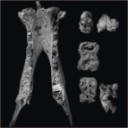
The discovery of new hippopotamid material from the late Miocene Baynunah Formation (Abu Dhabi, United Arab Emirates) has prompted the revision of the existing material of this as yet unnamed fossil taxon. The Baynunah hippopotamid appears to be distinct from all other contemporary and later species in having a relatively more elongate symphysis, a feature similar to the earlier (and more primitive) Kenyapotamus. Yet, the Baynunah hippopotamid presents a dentition typical of the Hippopotaminae. It is therefore a distinct species attributed to the later subfamily, described and named in this contribution. This species provides further evidence for a ca. 8 Ma evolutionary event (termed “Hippopotamine Event”) that initiated the spread and ecological significance of the Hippopotaminae into wet habitats across Africa and Eurasia. The morphological affinities of the new species from Abu Dhabi suggest that the Arabian Peninsula was not a dispersal route from Africa toward southern Asia for the Hippopotamidae at ca. 7.5 Ma to 6.5 Ma.
PV article infos
Published in Vol 41-1 (2018)
|
PDF
S.I. Data
|

|
Rongeurs caviomorphes de l'Oligocène de Bolivie. 1 Introduction au deseadien de Bolivie
Published online: 01/08/1976
Keywords:
Rodentia; South America
https://doi.org/10.18563/pv.7.3.1-16
Abstract
The Tertiary of the Salla-Luribay basin consists of red beds affected by the second period of the andine compression, of Miocene ending age. The Tertiary layers are exposed at an approximate elevation of 3.500 to 4.000 meters. Two stratigraphic units can be distinguished in them: the Luribay conglomerates, in which vertical clifts result from erosion, and the Salla layers consisting mostly of consolidated clays. These clays are very fossiliferous and have furnished a rich vertebrate fauna which gave to R. Hoffstetter the possibility to establish the Oligocene age of these beds. Sediments of same age has been reported to be present in several other places of Bolivia, particularly near Lacayani, where have been collected highly hypsodont Rodents, different from those found in Salla-Luribay basin.
PV article infos
Published in Vol. 07, Fasc. 3 (1976)
|
PDF
|

|
Cricetid rodents from Siwalik deposits near Chinji village. Part I: Megacricetodontinae, Myocricetodontinae and Dendromurinae.
Published online: 15/10/1988
Keywords:
Dendromurinae; Megacricetodontinae; Middle Miocene; Myocricetodontinae; Rodents; Siwalik
https://doi.org/10.18563/pv.18.2.95-154
Abstract
Seventeen species of cricetid rodent are recognized and described from lower and middle Siwalik deposits in the Potwar Plateau of Pakistan. These species are grouped in three categories, characterized as subfamilies (e. g., Megacricetodontinae, Myocricetodontinae, and Dendromurinae); an additional and more abundant category of rodents from these deposits, the Democricetodontinae, is excluded from this study, and will be described in a later study. Fifteen of the species are new, and four new genera are described. The Siwalik cricetid taxa are : Megacricetodon aquilari, n. sp.; Megacricetodon sivalensis, n. sp.; Megacricetodon daamsi, n. sp.; Megacricetodon mythikos, n. sp.; Punjabemys downsi, n. gen. & n. sp.; Punjabemys leptos, n. gen. & n. sp.; Punjabemys mikros, n. gen. & n. sp.; Myocricetodon sivalensis, n. sp.; Myocricetodon sp.; Dakkamyoides lavocati, n. gen. & n. sp.; Dakkamyoides perplexus, n. gen. & n. sp.; Dakkamys asiaticus, n. sp.; Dakkamys barryi, n. sp.; Dakkamys sp.; Paradakkamys chinjiensis, n. gen. & n. sp.; Potwarmus primitivus, n. gen.; and Potwarmus minimus, n. gen. & n. sp. This diverse record of middle Miocene small mammals illuminates a profound radiation of cricetid rodents in southem Asia, the effects of which were felt in Europe and Africa as well as the rest of Asia.
PV article infos
Published in Vol. 18, Fasc. 2 (1988)
|
PDF
|

|
Mammifères nouveaux de l'Ilerdien des Corbières et du Minervois (Bas-Languedoc, France)
Published online: 04/12/1989
Keywords:
Bas-Languedoc; Early Eocene; France; Ilerdian; Mammals; New taxa
https://doi.org/10.18563/pv.19.3.161-167
Abstract
Four new taxa (two genera, one subgenus, and four species) conceming the orders Condylarthra, Rodentia, Pantolesta, and an undetermined order from middle and middle/upper Ilerdian localities (lower Ypresian) of the Corbières and Minervois regions (Bas-Languedoc, Southem France) are presented in this short paper
PV article infos
Published in Vol. 19, Fasc. 3 (1989)
|
PDF
|

|
Contributions à l'étude du gisement Miocène supérieur de Montredon (Hérault). Les grands mammifères. 8 - Analyse paléoécologique de la faune mammalienne
Published online: 15/11/1988
Keywords:
France; Mammalia; Montredon; Paleoecology; Upper Miocene
https://doi.org/10.18563/pv.18.ext.177-186
Abstract
The species diversity of the mammalian fauna from Montredon (Hérault, France, late Miocene) is examined in terms of richness and abundance. A cenogramic analysis of the fossil mammalian community suggests the prevalence of open habitats, with the presence of marshes and of a poorly developed galery forest, and a climate rather warm and dry.
PV article infos
Published in Vol. 18, Ext (1988)
|
PDF
|

|
Rongeurs du Miocène supérieur de Chorora (Ethiopie): Cricetidae, Rhizomyidae,Phiomyidae, Thryonomyidae,Sciuridae.
Published online: 15/12/1998
Keywords:
cricetids; Ethiopia; phiomyids; rhizomyids; Rodentia; sciurids; thryonomyids; Upper Miocene
https://doi.org/10.18563/pv.27.3-4.203-216
Abstract
Besides Dendromurids and Murids, the Chorora Rodents include 7 taxa, two of which are new. Afaromys nov. gen. is a Cricetodontine with very complicated lower molars, certainly isolated for a long time from Eurasian species. A Paraphiomys, with tetralophodont upper molars, is also quite different from other East African species, and its roots should probably he searched in the middle Miocene. Other taxa are less original, and more similar to the South Asiatic ones.
PV article infos
Published in Vol. 27, Fasc. 3-4 (1998)
|
PDF
|

|
A new Ardynomys (Rodentia,Cylindrodontidae) from the Eocene of the eastern Gobi Desert, Mongolia.
Published online: 16/12/1996
Keywords:
Ardynomys; Eocene; Mongolia; Rodentia; Systematics
https://doi.org/10.18563/pv.25.2-4.339-348
Abstract
A partial skull of Ardynomys russelli sp. nov. (Rodentia, Cylindrodontidae) is described. This was collected in the late Eocene of Alag Tsab locality in the eastem Gobi Desert, Mongolia. Ardynomys russelli sp. nov. is characterized by small size, brachyodont molars, and retention of P3. It represents the earliest record of the genus Ardynomys MATTHEW & GRANGER, 1925, in Asia.
PV article infos
Published in Vol. 25, Fasc. 2-4 (1996)
|
PDF
|

|
New late Paleocene rodents (Mammalia) from Big Multi Quarry, Washakie Basin,Wyoming.
Published online: 16/12/1996
Keywords:
Clarkforkian; North America; Paleocene; Rodentia
https://doi.org/10.18563/pv.25.2-4.301-321
Abstract
The earliest North American rodents occur in basal Clarkforkian beds of the Fort Union Formation at Big Multi Quarry near Bitter Creek, northern Washakie Basin, Sweetwater County, Wyoming, and in closely correlative Fort Union beds formerly accessible in the Eagle Coal Mine near Bear Creek, northern Clark's Fork Basin, Carbon County, Montana. Two new species of early Clarkforkian rodents, Paramys adamus and Alagomys russelli, are described from Big Multi Quarry. Paramys adamus is represented by virtually complete upper and lower dentitions, which demonstrate that this species is one of the most primitive North American paramyids yet discovered. These specimens form the basis for a reevaluation of the content and stratigraphic range of P. atavus, which is known with certainty only from Bear Creek. Alagomys russelli is the first North American record for the enigmatic rodent family Alagomyidae, otherwise known from ?late Paleocene-early Eocene localities in Mongolia and China. Phylogenetic analysis of dental and gnathic traits suggests that Alagomyidae form the sister group of all other undoubted rodents. At least two rodent clades, alagomyids and basal paramyids, seem to have invaded North America from Asia at the beginning of Clarkforkian time, but only the paramyids persisted to undergo a significant evolutionary radiation in North America.
PV article infos
Published in Vol. 25, Fasc. 2-4 (1996)
|
PDF
|

|
Les Ischyrictis de la transition Vindobonien-Vallésien
Published online: 15/09/1972
Keywords:
Ischyrictis; Mustelidae
https://doi.org/10.18563/pv.5.5.253-260
Abstract
Le groupe des Mustélides « Ischyrictoïdes » développe des tendances évolutives qu’engendrent des formes de Carnassiers prédateurs robustes et de grande taille. C’est une évolution comparable à celle que l’on trouve chez Plesiogulo, qui, lui, a une origine énigmatique (Petter, 1963). Chez les Mustélides on peut signaler deux lignées assez nettes : celle du sous-genre nominal des Laphyctis, plus conservatrice, plus mustéliforme, renfermant les espèces Ischyrictis (Laphyctis) mustelinus VIRET et L. zibethoides BLAINVILLE ; celle de type félinoïde caractérisée par L. Ginsburg (1961) avec la forme type Ischyrictis (Hoplicitis) florancei du Vindobonien inférieur de Pontlevoy-Thenay et I. helbingi VIRET, 1951 du Vindobonien supérieur de la Grive Saint-Alban. De plus rappelons que I. vorax DEHM et I. comitans DEHM du Burdigalien de Wintershof-West sont sans rapport avec les espèces du Miocène supérieur (Ginsburg, o.c.).
Récemment G. Petter (o.c.) a montré la difficulté qu’il y avait à envisager que l’Ischyrictis de Can Llobateres qu’elle décrivait puisse être le descendant de Ischyrictis helbingi de La Grive : la forme plus récente est évidemment de plus grande taille, mais le développement très marqué et la position avancée du protocône paraissent constituer un obstacle à une telle filiation.
Donc on signalait jusqu’ici deux lignées de Mustélides « ischyrictoïdes » toutes deux de grande taille : d’une part I. zibethoides de Sansan, d’autre part I. helbingi de la Grive. Or à notre point de vue nous considérons actuellement qu’il existe très probablement trois phyla d’Ischyrictis. Le premier serait représenté par les formes burdigaliennes déjà nommées I. vorax et I. comitans ; il se caractériserait par la perte précoce de la P₁ inférieure et la forme spéciale de la canine inférieure. Ce premier ensemble pourrait être rassemblé dans le sous-genre Laphyctis. Le reste des ischyrictoïdes de type conservateur, pour ce qui est de la région des prémolaires et de la forme de la canine, pourrait être subdivisé en deux sous-genres : le sous-genre Ischyrictis désignant les formes les plus mustéliformes avec I. mustelinus et I. zibethoides d’une part, et le sous-genre Hoplicitis pour les formes félinoïdes avec I. florancei et I. helbingi.
PV article infos
Published in Vol. 05, Fasc. 5 (1972)
|
PDF
|

|
The endocranial cast and encephalization quotient of Ptilodus (Multituberculata, Mammalia)
Published online: 11/02/1993
Keywords:
encephaIization quotient; endocranial cast; Montana; Multituberculata; olfactory bulbs; Paleocene; Ptilodus
https://doi.org/10.18563/pv.22.2-3.99-112
Abstract
Simpson (1937a) reconstructed the brain of the Paleocene multituberculate Ptilodus as having the olfactory bulbs widest anteriorly, an unusual condition among mammals. Slight preparation and reexamination of the endocast specimens of Ptilodus reveals that the olfactory bulbs in fact taper anteriorly, as in the recently-described endocranial casts of three multituberculate species from the Late Cretaceous of Asia, and as in those of other mammals. The brain of Ptilodus was therefore essentially of the same general pattem as in other multituberculates. Ptilodus differs, however, in having the vermis more deeply inserted between the cerebral hemispheres. Other details concerning the endocast morphology of Ptilodus are clarified.
The encephalization quotient (EQ) of Ptilodus is recalculated from revised estimates of both endocranial volume and body mass to fall somewhere within a broad range of values; from 0.41 to 0.62 if the olfactory bulbs are included and from 0.37 to 0.55 if they are not. In any case, the relative brain size of Ptilodus is roughly equivalent to that of Chulsanbaatar, the only other multituberculate for which EQ has been calculated, but considerably smaller than that of an average extant mammnal.
PV article infos
Published in Vol. 22, Fasc. 2-3 (1993)
|
PDF
|

|
Les mammifères Montiens de Hainin (Paléocène moyen de Belgique) Part III : Marsupiaux
Published online: 30/09/1983
Keywords:
Belgium; Marsupials; Paleobiogeography; Paleocene
https://doi.org/10.18563/pv.13.3.51-64
Abstract
The oldest european marsupials are described from some specimens (isolated upper molars) recently found from the Hainin sediment (Middle Paleocene of Belgium). These fossils document a new species of the Peradectes genus. They give evidence of a much older occurrence of the marsupials in Europe than it was assumed. They allow us to postulate a didelphid dispersal from South America towards the western-holarctic area operating in two phases : the first one of the Peradectes genus at the end of the Cretaceous; the second one of the Didelphíni tribe at the end of the Paleocene. A central american crossing is likely for the first one, whereas a transafrican way is tentatively argued for the second one.
PV article infos
Published in Vol. 13, Fasc. 3 (1983)
|
PDF
|
|
A reassessment of the giant birds Liornis floweri Ameghino, 1895 and Callornis giganteus Ameghino, 1895, from the Santacrucian (late Early Miocene) of Argentina.
Published online: 13/12/2016
Keywords:
Argentina; Aves; Callornis; Liornis; Miocene
https://doi.org/10.18563/pv.40.2.e3
Abstract
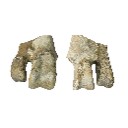
The status of the giant bird taxa Liornis floweri and Callornis giganteus from the Santa Cruz Formation (late Early Miocene) of Patagonia, first described by Ameghino (1895) is reassessed on the basis of a re-examination of the type material at the Natural History Museum, London. Liornis floweri, which lacks a Pons supratendineus on the tibiotarsus and has an unbifurcated Canalis interosseus distalis on the tarsometatarsus, is clearly a brontornithid and is considered as a junior synonym of Brontornis burmeisteri. Ameghino’s replacement of Callornis by Eucallornis is unjustified. Callornis giganteus is a chimera based on a phorusrhacid tarsometatarsus (probably belonging to Phorusrhacos longissimus) and a brontornithid tibiotarsus. The latter can be considered as the lectotype of Callornis giganteus, which may represent a small morph of Brontornis burmeisteri or a distinct taxon. It is referred to here as Brontornithidae indet. The tarsometatarsus described by Dolgopol de Saez (1927a,b) as Liornis minor and considered by her as a gracile brontornithid apparently has a bifurcated Canalis interosseus distalis and should therefore be placed among the Phorusrhacidae.
PV article infos
Published in Vol.40-2 (2016)
|
PDF
|

|
Contributions à l'étude du gisement Miocène supérieur de Montredon (Hérault). Les grands mammifères. 9 - Une tentative de magnétostratigraphie
Published online: 15/11/1988
Keywords:
France; magnetostratigraphy; Montredon; Upper Miocene
https://doi.org/10.18563/pv.18.ext.187-188
Abstract
Afin d'étudier la magnétostratigraphie de la colline de Montredon, j'ai prélevé en Avril 1982, 93 carottes orientées réparties sur 29 sites. J.-P. Aguilar et I. Loridant m'ont aidé durant cette opération. Pour la stratigraphie de la coupe échantillonnée et pour le contenu faunique des deux gisements de mammifères de cette colline, voir J.-P. Aguilar & J.-Y. Crochet (1982).
[...]
PV article infos
Published in Vol. 18, Ext (1988)
|
PDF
|