

Abstract book of the 18th Conference of the EAVP
Miocene Bovidae (Mammalia) of the Siwaliks: Hypsodontinae and Bovinae
Pterosaurs from Coahuila
Les sélaciens du Miocène de la région de Montpellier
Contribution à l'étude des genres Gliravus et Microparamys.
Muridae du Pliocène supérieur d'Espagne et du midi de la France.
Eocene (57) , Quercy Phosphorites (38) , Systematics (32) , Rodents (29) , Mammalia (27) , Rodentia (25) , Miocene (25)
Page 17 of 19, showing 20 record(s) out of 368 total

|
Die Referenzfauna des Geiseltalium, MP levels 11 bis 13 (Mitteleozan, Lutetium)Hartmut HauboldPublished online: 04/12/1989Keywords: Eocene; Geiseltal; Land mammal ages; Mammalian reference levels https://doi.org/10.18563/pv.19.3.81-93 Abstract The Middle Eocene Fossillägerstätte of the Geiseltal lignite beds near Halle/S. (German Democratic Republic) is the reference locality of the European land mammal age Geiseltalian and of the Mammalian Paleogene reference levels MP 11 - MP 13. Due to this importance a reinvestigation is given of the lithostratigraphical development of the Geiseltal beds and of their vertebrate sites. The last are genetically related to the southwest border of the Geiseltal depression and the influx of carbonate-rich waters. The geographical distribution and stratigraphical position of the fossiliferous sites depends on subrosive and tectonically controlled distribution of coal seams. The geological factors and the known stratigraphical guide of some mammalian species suggest corrections of the age of some sites. Four of the alltogether five coal bearing phases contain the 35 sites with mammalian remains. By the distribution of the around 69 mammal species are characterized, with 5 faunal steps ranging from MP 11 to MP 14 or over the Geiseltalian up to the Lower Robiacian. Well distant are the faunas of MP 11 and MP 12. Beginning with MP 12 up to MP 13/14, the fossil record is very frequent by 27 sites. This evidence coincides somewhat more with the concept of land mammal ages compared to that of the punctual mammalian reference levels. PV article infos Published in Vol. 19, Fasc. 3 (1989) |
|

|
Saturnin Garimond (1914-1987)Jean-Albert RemyPublished online: 15/11/1987Keywords: biography https://doi.org/10.18563/pv.17.3.151-154 Abstract Saturnin Garimond (1914-1987), naturaliste autodidacte né à Fons-outre-Gardon dans le Gard, a marqué la paléontologie et l'archéologie régionale par sa passion précoce pour les sciences naturelles. Quittant l'école à 10 ans, il s'instruit seul et explore inlassablement la garrigue, découvrant des sites préhistoriques dès 1930. Collaborant avec Camille Hugues, il fouille de nombreux gisements, dont la grotte de la Verrerie à Montmirat, révélant un outillage moustérien et des restes de néandertaliens. En 1961, il rejoint le Laboratoire de Paléontologie de Montpellier dirigé par Louis Thaler, contribuant à des fouilles majeures comme celle du gisement de Fons 4. En 1965, il permet la découverte du premier mammifère mésozoïque de France au gisement de Champ-Garimond. Membre de la Société Géologique de France, son érudition et sa collaboration ont enrichi de nombreuses recherches. Homme simple et affable, il a marqué tous ceux qui l'ont connu par son enthousiasme et ses connaissances encyclopédiques. PV article infos Published in Vol. 17, Fasc. 3 (1987) |
|

|
Contributions à l'étude du gisement Miocène supérieur de Montredon (Hérault). Les grands mammifères. 5 - Les périssodactyles EquidaeVéra EisenmannPublished online: 15/11/1988Keywords: Equidae; Hipparion; Late Vallesian; Mammalia; Montredon; Perissodactyla https://doi.org/10.18563/pv.18.ext.65-96 Abstract Revision of the hipparion material from Montredon, including newly excavated and other unpublished specimens brings evidence of specific heterogeneity. PV article infos Published in Vol. 18, Ext (1988) |
|

|
Evolution et extinction des reptiles marins au cours du Mésozoïque.Nathalie Bardet
Published online: 02/10/1995 |
|

|
Etude du crâne de Pachynolophus lavocati n. sp. (Perissodactyla, Palaeotheriidae) des Phosphorites du QuercyJean-Albert RemyPublished online: 15/02/1972Keywords: Perissodactyla; Quercy Phosphorites https://doi.org/10.18563/pv.5.2.45-78 Abstract The genus Pachynolophus, one of the poorest known of the Palaeotheriidae, includes the brachyodont forms with reduced and non-molariform premolars and with upper molars lacking a mesostyle. Quantitative characters (divers surface indications and elongation of the teeth), while demonstrating a close relationship to Hyracotherium, permit a better differentiation of the genus, confirm its specific splitting, and permit the distinction of three lineages. The skull from Memerlein is taken as the type of a new species, P. Iavocati, of which the dentition is extremely characterized by its lophiodonty, the strong reduction of the premolars and the reduction of the cingula. This characterization testifies to a late age which extends the existence of the genus quite near to the Eocene-Oligocene limit. Compared with the only two skulls known of related species (Hyracotheríum vulpiceps and Pachynolophus Iivinierensis), that from Memerlein is distinguished by progressive characters affecting diferent regions but most particularly the braincase; it is not possible, however, to isolate within this evolution the part which leads to a systematic differentiation. Modernization is translated by a considerable increase in size of the braincase, principally in the frontal region, a development of the facial region with anterior displacement of the dental series and a greater specialization of the masticatory apparatus. This evolution parallels the history of the Equidae of the North American early Tertiary, but certain particularities, the form of the alisphenoid, the presence of an anterior frontal foramen, and the structure of the paroccipital apophysis, testifies to the independance of the European forms. PV article infos Published in Vol. 05, Fasc. 2 (1972) |
|

|
Analyse d'ouvrage: “J.J. THOMASON (Ed.): Functional morphology invertebrate paleontology (1995)”Jacques MichauxPublished online: 18/03/1996Keywords: Book review; Functional morphology https://doi.org/10.18563/pv.25.1.54-55 Abstract Functional morphology invertebrate paleontology, édité par Jeffrey J. THOMASON, 1995. Cambridge University Press, xi + 277 p. ISBN 0-521-44095-5, f. 45,00 ($ 69,95). PV article infos Published in Vol. 25, Fasc. 1 (1996) |
|

|
Découverte d'un gisement de micromammifères d'âge Pliocène dans le bassin de Constantine (Algérie), présence d'un muridé nouveau : Paraethomys Athmeniae n.sp.Brigitte Coiffait and Philippe-Emmanuel CoiffaitPublished online: 16/05/1981Keywords: Algeria; Constantine; Micromammals; Muridae; Pliocene https://doi.org/10.18563/pv.11.1.1-15 Abstract The study of that locality allowed the description of a new Muridae : Paraethomys athmeniae n. sp. It reveals the existence of new rodent for Algeria : first, a Sciuridae, Atlantoxerus cf. rhodius, and second, a Gliridae, Eliomys truci. So, that work shows the presence of the genus Eliomys in North Africa before the middle of Pleistocene. Lastly, Paraethomys cf. anomalus gives an exact datation of that bed. PV article infos Published in Vol. 11, Fasc. 1 (1981) |
|

|
La poche à phosphate de Ste-Néboule (Lot) et sa faune de vertebres du Ludien supérieur. 11- CréodontesBrigitte Lange-BadréPublished online: 25/09/1978Keywords: Creodonta; Eocene; Quercy Phosphorites https://doi.org/10.18563/pv.8.2-4.295-299 Abstract The teeth and the astragale of the Creodonta from Ste-Néboule (Lot) are referred to Hyaenodon brachyrhynchus. Isolated teeth fit morphologically the material from La Débruge (Middle Ludian). However, biometric analysis suggests an Upper Ludian age. PV article infos Published in Vol. 08, Fasc. 2-4 (1978) |
|

|
Rongeurs Caviomorphes de l'Oligocène de Bolivie. 2 Rongeurs du Bassin Deseadien de Salla-Luribat.René LavocatPublished online: 01/08/1976Keywords: cranium; Paleobiogeography; Rodentia https://doi.org/10.18563/pv.7.3.15-71 Abstract The fauna studied in the following work involves the dentitions and skulls more or less complete of 5 genera, among which only Cephalomys was previously known by its skull. One must notice that the Salla's species of this genus is a new one. Sallamys, rather small, shows a dentition rather similar to that of Platypittamys Wood from Patagonia. The upper molars, more primitive than those of this last genus, according to the smaller dimensions of the hypocone, retain a distinct metaloph. This metaloph tends to be reduced in a way which may give us a possibility to understand how it disappeared in Platypittamys. The upper P4 can be compared as well to that of Platypittamys as to that of Gaudeamus from the African Oligocene. The lower P4, more molarized than that of Platypittamys, is already moving towards the miocene type of structure. The infraorbital foramen is wide and the insertion of the masseter on the muzzle is spacious. Branisamys, genus of a great size, shows an auditory region partly preserved, peculiarly the promontorium with the fenestra rotunda, entirely of the Hystricognathi type. Upper molars are very clearly pentalophodont. A new reconstruction is proposed for the tooth called Villarroelomys by Hartenberger. This tooth is shown to be a lower D4, perhaps of Branisamys , certainly of a rather nearly allied form, and Hartenberger does agree with the essential part of this new conclusion. Of Incamys, two incomplete skulls are known, each one being admitted to be the type of a distinct species, the first one being I. bolivianus, I. pretiosus the second. The infraorbital foramen is of a great size and the impression of the masseter on the muzzle is spacious. The sphenopalatine foramen is widely developed and of a really very uncommon great size. Only Thryonomys from Africa shows a similar tendency to the enlargement of this foramen, but not so extreme. The main basicranial foramina can be observed. The upper teeth, hemi-hypsodont, show, either a vestigial metaloph, similar to that of recent Thryonomys from Africa, associated with a well developed mesoloph, either a well developed metaloph, while the mesoloph is reduced or absent. Cephalomys was previously known by anterior parts of the skull showing a wide infraorbital foramen and a spacious facial insertion of the masseter. Its lacrymal is of the phiomorph type and the spheno-palatine foramen is seemingly of great size, like in Incamys. The species is new. The varied peculiarities of the upper teeth of these genera can be easily understood if we refer to the plan of the teeth of Phiomys andrewsi from the Oligocene and Miocene of Africa. The structure of this genus, clearly more primitive, still typically brachyodont, shows and clearly explains the fundamental coherence of the varied realisations arised from such a structure. Luribayomys n.g. is known only by an anterior half of a skull without teeth. It is remarquable by the great development of the masseter's insertions on the muzzle and by the lacrymal region, well preserved, typically phiomorphid. The classification previously published by A.E. Wood and B. Patterson is granted in its essential parts, provisionally, but not as a definitive solution. Nevertheless the Dasyproctidae are integrated within the Cavioidea, following the conclusions of Bugge and of Vucetich, reached independently. The conclusion emphasizes the exceptional meaning of the fauna of Salla-Luribay. This shows that Platypittamys, while interesting, can no more be supposed certainly representative of the normal structure of the Oligocene Caviomorph, and not even of their ancestors. The anatomical peculiarities exhibited in these new samples, auditory region, lacrymal, spheno-palatine foramen, reinforce the primitive structural identity with the Phiomorpha. Similarly, the new lower D4 favour very close relationships, ever if the affinities of the D4 has been questioned or minimized by Wood and Patterson. It is certainly possible to admit that parallelism could explain limited similarities, like the presence in North America of Rodents with an hystricomorph type of infraorbital foramen and an hystricognath mandible. But if the parallelism could be a sufficient explanation of the identical association of multiple and complete structures observed in the Caviomorpha and Phiomorpha, all the Zoological systematic would have to be questioned. The last positions of A.E. Wood on the subject (1975) are revised and criticised, and the recent publications studying the problems of distance between Africa and South America in Eocene time, as a consequence of the drift, are quoted; the possibility of transportation by rafts is shown. A new hypothesis is proposed about the interrelationships of Pentalophodont Rodents, with interesting paleobiogeographic implications. PV article infos Published in Vol. 07, Fasc. 3 (1976) |
|

|
Premières données sur les rongeurs de la formation de Ch'orora (Ethiopie) d'âge Miocène supérieur. I: ThryonomyidésJean-Jacques Jaeger
Published online: 01/10/1980 |
|

|
Une faunule de vertébrés sous la base de grès de Celas (Eocène supérieur) à ST Dresery (Gard)Jean-Albert RemyPublished online: 20/05/1994Keywords: Artiodactyla; Biostratigraphy; Eocene; Mammals https://doi.org/10.18563/pv.23.1-4.211-216 Abstract The St-Dézéry local fauna (3 reptile-, 4 mammal species) is approximately of the same age as the La Débruge or the Ste-Néboule faunas. It conduces to a better dating of the limestones underlying the Célas sandstones. A large part of a mandible of Amphimeryx was found there, which documents the record of this family of small artiodactyls PV article infos Published in Vol. 23, Fasc. 1-4 (1994) |
|

|
Analyse d'ouvrage: Jean-Claude Rage, Handbuch der Paläeoherpetologie Teil 11: SerpentesJacques MichauxPublished online: 15/11/1984Keywords: Book review https://doi.org/10.18563/pv.14.3.199 Abstract Le volume 11 du «Handbuch der Paläeoherpetologie», consacré aux «Serpellles» et redigé par Jean-Claude Rage, apporte une remarquable information sur ce groupe particulier de reptiles dont on ne pouvait guere se faire une idée très précise à partir, par exemple, des seuls chapitres des traités classiques de Paléontologie et de Zoologie. PV article infos Published in Vol. 14, Fasc. 3 (1984) |
|

|
Nouvelle interprétation de l'évolution du genre Megacricetodon au cours du MiocèneJean-Pierre AguilarPublished online: 01/10/1980Keywords: Megacricetodon; Micromammals; Miocene https://doi.org/10.18563/pv.9.ext.355-364 Abstract La découverte de nouveaux gisements à micromammifères dans le Miocène du Sud de la France et d'Espagne montre que, s'il n'est plus possible d'accepter dans son intégralité le schéma phylétique de Fahlbusch du genre Megacricetodon, il existe toutefois des segments de lignées à l'intérieur de provinces géographiques différentes (Péninsule Ibérique, France, Europe Centrale), avec lesquels on peut établir une biochronologie locale, segments qu'il est aussi possible de placer les uns par rapport aux autres, en utilisant les corrélations que l'on peut reconnaître entre certains niveaux repères des mammalogistes et l'échelle stratigraphique marine. PV article infos Published in Vol. 9, Ext (1980) |
|

|
Repartition et dynamisme des faunes de Lacertilia et d'Amphisbaenia dans l'Eocène EuropeMarc AugéPublished online: 11/02/1993Keywords: Amphisbaenia; climate; Endemism; Eocene; Europe; Lacertilia; Metabolism https://doi.org/10.18563/pv.22.2-3.51-71 Abstract The composition of assemblages of lizards and Amphisbaenian from the European Eocene are described. At least ten lizard families are identified from the lower European Eocene levels. Eight are still recorded in the last level (Escamps) of the late Eocene. Agamid lizards (genus Tinosaurus) died out by the end of the lower Eocene and Varanid lizards (genus Saniwa) disappeared by the beginning of the late Eocene. Amphisbaenians are recorded throughout the Eocene in Europe. The lacertilian fossil record of Europe and North America show a high degree of faunal resemblance in the early Eocene, followed by a decrease during the later part of the epoch. The lacertilian and amphisbaenian faunas from the European Eocene are not subject to great variations during the period; this is in contrast with the mammal record at the same time. It is argued that the low metabolic rates and the ectothermy of lizards could explain those differences, along with the increasing insularity of the West European area during the late Eocene time. PV article infos Published in Vol. 22, Fasc. 2-3 (1993) |
|
|
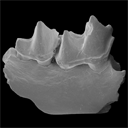
First Neogene Otonycteris (Chiroptera: Vespertilionidae) from Ukraine: its biostratigraphic and paleogeographic significance.Valentina V. RosinaPublished online: 19/03/2015Keywords: bats; East Europe; Gritsev; Late Miocene; Mammalia https://doi.org/10.18563/pv.39.1.e2 Abstract A new species, Otonycteris rummeli nov. sp., is described from the Late Miocene site Gritsev (MN 9) in the Ukraine. Otonycteris rummeli nov. sp. differs from those of most vespertilionids, except recent Otonycteris, Antrozous and Early Miocene Karstala silva, in having a well-developed entocingulid at the foot of the trigonid valley in the lower molars. The morphological resemblance of Otonycteris, Antrozous and Karstala is apparently a case of convergence in the evolution of the Old and New Worlds bat faunas. From at least the Middle Miocene the range of Otonycteris distribution spread to the whole of Central Europe and such a situation continued during the whole Late Miocene. This indicates a more arid climate in Europe during the Upper Miocene compared to the Quaternary. The reduction of the distribution range of Otonycteris and its extinction in most of the territory of Europe could have been caused by the global climatic cooling and increasing glacial cycle amplitude during the onset of the Quaternary. PV article infos Published in Vol.39-1 (2015) |
|
|
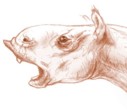
There were giants upon the earth in those daysPierre-Olivier Antoine
Published online: 16/07/2014 |
|

|
La poche à phosphate de Ste-Néboule (Lot) et sa faune de vertebres du Ludien superieur. 14 - Conclusions généralesJean-Louis HartenbergerPublished online: 25/09/1978Keywords: Eocene; Quercy Phosphorites https://doi.org/10.18563/pv.8.2-4.319-326 Abstract Le matériel provenant de nouvelles fouilles dans les phosphorites du Quercy, soumis aux divers spécialistes, a conduit à la soutenance de plusieurs thèses d'état: sur les rongeurs (Hartenberger, Vianey-Liaud), les Chiroptères et Insectivores (Sigé), les Artiodactyles (Sudre), les Squamates (Rage) et, en partie, les Chéloniens (De Broin). Chacun dans son domaine, à côté des conclusions d'ordre évolutif, paléogéographique ou paléoécologique, a pu établir des successions stratigraphiques des gisements du Quercy qui se sont révélées largement concordantes. Ainsi la succession des faunes du Quercy est actuellement l'une des mieux établies. Dans ce contexte, les différents spécialistes ont décidé de conjuguer leurs efforts dans l'étude monographique de plusieurs gisements repérés le long de cette échelle, afin de rassembler l'information paléontologique sur des faunes bien précises et de tenter d'obtenir des indications d'ordre taphonomique. PV article infos Published in Vol. 08, Fasc. 2-4 (1978) |
|

|
Hyracodontids and rhinocerotids (Mammalia, Perissodactyla, Rhinocerotoidea) from the Paleogene of MongoliaDemberelyin DashzevegPublished online: 29/10/1991Keywords: Hyracodontidae; Mongolia; Paléogène; Perissodactyla; Rhinocerotidae https://doi.org/10.18563/pv.21.1-2.1-84 Abstract Two families are reviewed (Hyracodontidae and Rhinocerotidae) from the Paleogene of Mongolia. The following taxa are described from the former family: Triplopus? mergenensis sp. nov., Prohyracodon meridionale CHOW, Prohyracodon? parvus sp. nov., Forstercooperia ergiliinensis GABUNIA & DASHZEVEG, Ardynia praecox MATTHEW & GRANGER, A. mongoliensis (BELIAYEVA), Ardynia sp., Urtinotheríum sp. (or Indricotherium) and Armania asiana GABUNIA & DASHZEVEG. All of them are from the Paleogene of the eastem Gobi Desert The hyracodontid Pataecops parvus RADINSKY is described from a new locality, Menkhen-Teg (Middle Eocene), in the Valley of Lakes. PV article infos Published in Vol. 21, Fasc. 1-2 (1991) |
|

|
Les rongeurs de l'Oligocène inférieur d'EscampsMonique Vianey-Liaud
Published online: 01/12/1974 |
|

|
Analyse d'ouvrage: “M. ARSENAULT, H. LELIÈVRE & P. JANVIER (Eds.): Etudes sur les vertébrés inférieurs — VII e Symposium International, Parc de Miguasha, Québec, 9- 22 Juin 1991 (1994)”Alain BlieckPublished online: 18/03/1996Keywords: Book review https://doi.org/10.18563/pv.25.1.51-53 Abstract Etude sur les vertébrés inférieurs (VIIe Symposium International, Parc de Miguasha, Québec, 9-22 Juin 1991), édité par Marius ARSENAULT, Hervé LELlÈVRE & Philippe JANVIER, 1994. Bulletin du Muséum National d'Histoire Naturelle, Paris, 4e Série, T. 17, Section C, n° 1-4, 529 p. PV article infos Published in Vol. 25, Fasc. 1 (1996) |
|
