

Abstract book of the 18th Conference of the EAVP
Miocene Bovidae (Mammalia) of the Siwaliks: Hypsodontinae and Bovinae
Pterosaurs from Coahuila
Les sélaciens du Miocène de la région de Montpellier
Contribution à l'étude des genres Gliravus et Microparamys.
Muridae du Pliocène supérieur d'Espagne et du midi de la France.
Eocene (57) , Quercy Phosphorites (38) , Systematics (32) , Rodents (29) , Mammalia (27) , Rodentia (25) , Miocene (25)

|
Les poissons crétacés et tertiaires du bassin des Iullemmeden (République du Niger)Henri Cappetta
Published online: 15/09/1972 |
|
|
Designating a lectotype for Mesacanthus pusillus (Gnathostomata: Acanthodii)Matthew G. Baron
Published online: 03/03/2021 |
S.I. Data |
|
New material of “Eurysternidae” (Thalassochelydia, Pan-Cryptodira) from the Kimmeridgian of the Swiss Jura MountainsChristian Püntener
Published online: 25/06/2020 |
|
|
Enamel hypoplasia on rhinocerotoid teeth: Does CT-scan imaging detect the defects better than the naked eye?Manon Hullot
Published online: 03/01/2022 |
S.I. Data |

|
Die Ohr-Region der Paulchoffatiidae (Multituberculata, Ober-Jura).Gerhard HahnPublished online: 15/11/1988Keywords: Multituberculata; Ober-Jura; Paulchoffatiidae; Petrosum; Portugal https://doi.org/10.18563/pv.18.3.155-185 Abstract The petrosal of the Paulchoffatiidae HAHN, 1969 is described and compared with that of younger multituberculates and of other Mesozoic mammals. The "Morrison petrosal", described by Prothero (1983), is also discussed; it probably belongs to the multituberculates. The reconstruction of the ventral side of the Paulchoffatiinae-skull, given by Hahn in 1987, is completed by addition of the otic and the occipital region. PV article infos Published in Vol. 18, Fasc. 3 (1988) |
|
|
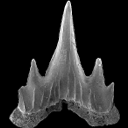
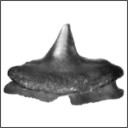
Two new scyliorhinid shark species (Elasmobranchii, Carcharhiniformes, Scyliorhinidae), from the Sülstorf Beds (Chattian, Late Oligocene) of the southeastern North Sea Basin, northern Germany.Thomas ReineckePublished online: 30/04/2014Keywords: Chattian; Elasmobranchii; North Sea Basin; Scyliorhinidae; Scyliorhinus https://doi.org/10.18563/pv.38.1.e1 Abstract Based on isolated teeth two new scyliorhinid shark species, Scyliorhinus biformis nov. sp. and Scyliorhinus suelstorfensis nov. sp., are described from the Sülstorf Beds, early-middle Chattian, of Mecklenburg, northeastern Germany. They form part of a speciose assemblage of necto-benthic sharks and batoids which populated the warm-temperate to subtropical upper shelf sea of the south-eastern North Sea Basin. PV article infos Published in Vol.38-1 (2014) |
|

|
Reflections on some Russian eotheriodonts (Reptilia, Synapsida, Therapsida)Denise Sigogneau-Russell and P. K. TchudinovPublished online: 28/02/1972Keywords: Reptilia; Russia; Synapsida; Therapsida https://doi.org/10.18563/pv.5.3.79-109 Abstract As a result of the enrichment of eotheriodont material by one of us (P.K.T.), these specimens (essentially Biarmosuchur and Eotitanosuchur) are reexamined and refigured. A reevaluation of their particularities supports the distinction of two families, for which new diagnoses are proposed. This leads us to discuss the affinities of these families, with respect to the sphenacodonts on one hand, and to the South African primitive theriodonts on the other (gorgonopsids and ictidorhinids). This study contains inherent paleogeographic consequences which are considered in conclusion. PV article infos Published in Vol. 05, Fasc. 3 (1972) |
|

|
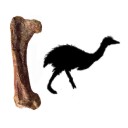
The paramyid rodent Ailuravus from the middle and late Eocene of Europe, and its relationshipsAlbert E. WoodPublished online: 15/05/1976Keywords: Ailuravinae; Rodentia https://doi.org/10.18563/pv.7.1-2.117-149 Abstract The complex taxonomic history of the paramyid rodent genus Ailuravus is reviewed. It has been described as Hyracotherium, as a creodont carnivore and as a lemuroid primate - errors at the ordínal level that are most unusual for a rodent. The genus is a member of the poorly known subfamily Ailuravinae, probably derived from some European Early Eocene species of Paramys. Aíluravus was a large arboreal paramyid with highly rugose cheek teeth, very well developed hypocone, and a remarkably weak lower incisor. It was tropical to subtropical. Three named species are recognized, A. macrurus from the Lutetian of Messel; the genotype, A. picteti, from Egerkingen, Buchsweiler and the Geiseltal, slightly later in the Lutetian; and A. stehlinschaubi, new name, from the Bartonian of Mormont-Eclépens and Robiac. One or more unnamed species are present in the Ypresian of Cuis. The species are close to a phyletic sequence. No later representatives of the genus are known. The late Eocene to earliest Oligocene North American paramyid Mytonomys, whose relationships have been obscure, is tentatively referred to the Ailuravinae. PV article infos Published in Vol. 07, Fasc. 1-2 (1976) |
|
|
|
|
|
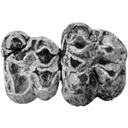
A new study of the anthracotheres (Mammalia, Artiodactyla) from pondaung formation, Myanmar: systematics implicationsAung N. SoePublished online: 16/12/2008Keywords: Anthracohyus; Anthracokeryx; Anthracotherium; Pondaung Formation; sexual dimorphism; Siamotherium; South East Asia; taxonomy https://doi.org/10.18563/pv.36.1-4.89-157 Abstract Anthracotheres from the Pondaung Formation, Myanmar, are considered as one of the most primitive artiodactyl groups and they represent the oldest known record in the world. Thus, the understanding of this group has numerous implications for evolutionary biology and biochronological correlations. However, the systematlcs of these mammals has been interpreted in different ways, and the main debate focuses on the number of taxa represented in the Pondaung Formation. The revised taxonomy proposed here is mainly based on the relative development of the upper molar W-shaped ectoloph, system of crests and stylar cusps, and on body size. On the basis of these characters, they are classified into four genera including six different species. Two well-known genera, Anthracotherium and Anthracokeryx, are validated and more precisely diagnosed. Anthracokeryx possesses a better developed W-shaped ectoloph, system of crests and stylar cusps than Anthracotherium, which displays notable differences with the more derived representatives of this genus. Both of these Pondaung genera show evidence for sexual dimorphism. However, the incompleteness of fossil material fueled a debate concerning the status of two additional Pondaung anthracotheres, Siamotherium and Anthracohyus. The latter genus is of uncertain affinities, but it has been considered as a hippopotamid ancestor. Despite new material attributed to these two forms, additional discoveries are still required to establish their taxonomic status. The hypothesis that Southeast Asia was the centre of origin of Anthracotheriidae is supported by the retention of numerous primitive dental characters in these taxa and by the antiquity of the Pondaung Formation, to which an age of 37 My is now generally accepted. PV article infos Published in Vol. 36, Fasc. 1-4 (2008) |
|

|
Eurodexeinae, eine neue unterfamilie der Artiodactyla (Mammalia) aus dem unter- und mitteleozän europasJorg Erfurt and Jean SudrePublished online: 16/12/1996Keywords: Artiodactyls; Eocene; evolution; Germany; Lutetian; new genus; New subfamily https://doi.org/10.18563/pv.25.2-4.371-390 Abstract Dichobunoid artiodactyls are described in this paper from the middle Eocene Geiseltal lignite deposits near Halle (Sachsen-Anhalt, Germany). The genera Eurodexis and Parahexacodus are established based on odontologica1 studies. The type-species are E. ceciliensis (FRANZEN & KRUMBIEGEL, 1981) and P. germanicus n. sp. from the "obere Mittelkohle" (see text), MP 13. The genera are referred to the new subfamily Eurodexeinae (Dichobunidae, Artiodactyla, Mammalia), which also contains the monospecific genus Eygalayodon SUDRE & MARANDAT, 1993. These new genera show many features similar to North American homacodontids and antiacodontids. They exemplify a high degree of diversity in European dichobunids. Moreover, the family Dichobunidae includes the Dichobuninae and the Hyperdichobuninae. The connection of the posthypocristid with the postentocristid, the shift of a medial to a lingual position of the hypoconulid on the lower molars and the development of a large, caniniform P1 are regarded as the principal tendencies of the eurodexeines. The entoconid is larger and more mesially situated compared to that of Diacodexis. The hypoconulid has a lingual position on a broad postcingulid. The elongation of the premolars and the presence of diastemata are considered associated with extension of the muzzle. This and the acute tubercles of the molars could indicate a limited degree of insectivory. Protodichobune cf. oweni and Diacodexis cf. varleli, first reported here from the "untere Unterkohle" (MP 11) of the Geiseltal, demonstrate the existence of forms in the basal part of the middle Eocene, that are direct descendants of lower Eocene ones. Eurodexis russelli n. sp. from MP 10 of Premontre is the most primitive representative of Eurodexis. A further part of this lineage could be Messelobunodon sp. from MP 11 of Messel (Germany). Another form from Premontre, referred to Eurodexeinae indet., represents the origin of the lineage to Parahexacodus germanicus n. sp. from the Geiseltal (MP 13). The identification of several lineages in MP 10 is evidence of an adaptive radiation during this time. Unfortunately the history of the earlier species of Diacodexis is not known well enough to exclude earlier diversifications. Our study shows the independent development of artiodactyls at the end of the lower Eocene in Europe, North America (and maybe in Asia) with much convergence. The question of the geographic origin of the genus Diacodexis is still open. PV article infos Published in Vol. 25, Fasc. 2-4 (1996) |
|

|
Observations sur des remaniements structuraux post-mortem dans des dents de mammifères fossiles provenant des phosphorites du QuercyJean-Albert RemyPublished online: 01/12/1974Keywords: Quercy Phosphorites; rearrangements; Teeth https://doi.org/10.18563/pv.6.3-4.163-176 Abstract Deux types de remaniements post mortem me paraissent caractéristiques de l'état de conservation des dents de mammifères fossiles dans les Phosphorites du Quercy : PV article infos Published in Vol. 06, Fasc. 3-4 (1975) |
|

|
Observations sur l'anatomie crânienne du genre Palaeotherium (Perissodactyla, Mammalia): mise en évidence d'un nouveau sous-genre, FranzenitheriumJean-Albert RemyPublished online: 01/12/1992Keywords: Palaeotherium; Paléogène; Perissodactyla; skull anatomy; Systematics https://doi.org/10.18563/pv.21.3-4.203-224 Abstract The skull remains referred to the genus Palaeotherium are recorded and described. Biometrical tests are made to elucidate intrageneric allometric relationships and to allow comparisons with various other perissodactyls. Apart from the well known shortness of post canine diastems and deepness of the narial opening, the genus is characterized by a great lengthening of the splanchnocranium, owing to a spreading of the post-orbital facial region, by a reduced area of the eye-socket and by the prevalence of the temporal muscle with regard to the masseter; this original shape of the masticatory apparatus needs to be related to the morphology of the jugal teeth and particularly to their asymmetrical semi-hypsodonty. PV article infos Published in Vol. 21, Fasc. 3-4 (1992) |
|

|
Les gangas (Aves, Columbiformes, Pteroclidae) du Paléocène et du Miocène inférieur de France.Cécile Mourer-Chauviré
Published online: 11/02/1993 |
|
|
Batoids (Rajiformes, Torpediniformes, Myliobatiformes) from the Sülstorf Beds (Chattian, Late Oligocene) of Mecklenburg, northeastern Germany: a revision and description of three new speciesThomas ReineckePublished online: 24/06/2015Keywords: Batoids; Chattian; Elasmobranchii; North Sea Basin; Oligocene https://doi.org/10.18563/pv.39.2.e2 Abstract Bulk-sampling of fossil-rich tempestites from the Chattian Sülstorf Beds of PV article infos Published in Vol.39-2 (2015) |
|
|
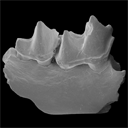
First Neogene Otonycteris (Chiroptera: Vespertilionidae) from Ukraine: its biostratigraphic and paleogeographic significance.Valentina V. RosinaPublished online: 19/03/2015Keywords: bats; East Europe; Gritsev; Late Miocene; Mammalia https://doi.org/10.18563/pv.39.1.e2 Abstract A new species, Otonycteris rummeli nov. sp., is described from the Late Miocene site Gritsev (MN 9) in the Ukraine. Otonycteris rummeli nov. sp. differs from those of most vespertilionids, except recent Otonycteris, Antrozous and Early Miocene Karstala silva, in having a well-developed entocingulid at the foot of the trigonid valley in the lower molars. The morphological resemblance of Otonycteris, Antrozous and Karstala is apparently a case of convergence in the evolution of the Old and New Worlds bat faunas. From at least the Middle Miocene the range of Otonycteris distribution spread to the whole of Central Europe and such a situation continued during the whole Late Miocene. This indicates a more arid climate in Europe during the Upper Miocene compared to the Quaternary. The reduction of the distribution range of Otonycteris and its extinction in most of the territory of Europe could have been caused by the global climatic cooling and increasing glacial cycle amplitude during the onset of the Quaternary. PV article infos Published in Vol.39-1 (2015) |
|
|
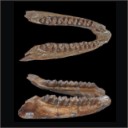
A mandible of the hyracoid mammal Titanohyrax andrewsi in the collections of the Muséum National d'Histoire Naturelle, Paris (France) with a reassessment of the speciesRodolphe Tabuce
Published online: 18/04/2016 |
|
|
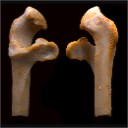
New remains of the very small cuckoo, Chambicuculus pusillus (Aves, Cuculiformes, Cuculidae) from the late Early/early Middle Eocene of Djebel Chambi, TunisiaCécile Mourer-Chauviré
Published online: 15/02/2016 |
|

|
Physogaleus hemmooriensis (Carcharhinidae, Elasmobranchii), a new shark species from the early to middle Miocene of the north sea basin.Thomas Reinecke and Kristiaan HoedemakersPublished online: 15/10/2006Keywords: Carcharhinidae; Early Miocene; Elasmobranchii; Hemmoorian; new species; North Sea Basin; Physogaleus https://doi.org/10.18563/pv.34.e14 Abstract A new carcharhinid shark species, Physogaleus hemmooriensis sp. nov., is described from the Lower Hemmoorian (Behrendorfian, late Burdigalian, early Miocene) of Werder, Lower Saxony, Germany. P. hemmooriensis also occurs in the Edegem and Antwerpen Sands Members of the Berchem Formation, Belgium, and in the Miste Bed, Aalten Member of the Breda Formation, The Netherlands, which have an early to middle Miocene age. In the Western Atlantic region, the taxon is present in the early Miocene Calvert Formation of Delaware, U.S.A, which is largely contemporaneous with the Hemmoorian. PV article infos Published in Vol. 34, Fasc. 1-2 (2006) |
|

|
Artiodactyla aus den Eozänen Braunkohlen des Geiseltales bei Halle (DDR)Jorg Erfurt and Hartmut HauboldPublished online: 04/12/1989Keywords: Artiodactyles; Eocene; Europe; Paleoecology; Stratigraphy; taxonomy https://doi.org/10.18563/pv.19.3.131-160 Abstract The present study of Artiodactyla from the Middle Eocene of the Geiseltal lignite beds concems systematics, biostratigraphy, and palaeoecology on the basis of 174 specimens: isolated remains to more complete skeletons. Instead of the formerly known five species of two families are now recognized 14 species of the Diacodexeidae, Dichobunidae, Cebochoeridae, and Haplobunodontidae. New species are Aumelasia maniai, Anthracobunodon neumarkensis, Masillabune franzeni. Four species of the Geiseltalfauna are definitely known from elswere, and five species are closely related to those from other European localities. Evidently the faunal situation of artiodactyls during the Middle Eocene of Europe was largely uniform. The distribution of artiodactyls within the sequence of the Geiseltal strata corroborates the biostratigraphical concept of the land mammal age Geiseltalian (Franzen & Haubold l986b) as well as the mammalian reference levels MP 11-13 (Franzen 1987). Reconstructions of the skulls and skeletons allow conclusions on the functional morphology and palaeoecology of the artiodactyls of the European Middle Eocene PV article infos Published in Vol. 19, Fasc. 3 (1989) |
|
